Brad Wardell's Blog


Gaming advertisement

Published on Wednesday, May 24, 2006 By Brad Wardell In GalCiv Journals

Ever wonder how effective advertising is? I remember when I was a kid hearing how much was spent on TV ads and thinking "What a waste of money" for most of those ads. I think ads about "Branding" or on immediate needs (like food or toiletries) can be effective. But many other ads, I dunno.

Magazine ads are something I don't know about either.  And yet here we are, spending hundreds of thousands of dollars per quarter. How effective are they?  Does that $20,000 two-page spread in a game magazine generate 2X in sales of the game?  At least with web ads, you know how many impressions and click-thrus you get.  But on magazine ads, who knows. Is anyone seeing them? Might make for an interesting poll question.

And then there's the "well if they see them..." did it make them more inclined to buy the game? 

I admit to having a bit of a personal reason for wanting to advertise so heavily in the magazines and on certain webzines.  I don't believe in "karma" but I felt that for years, our company was too poor to support the magazines that had been kind and fair to use over the years.  Computer Gaming World, for instance, covered The Political Machine with a Tom vs. Bruce article.  CGW knew there would be no ads. They covered it because they thought it was of interest to their readers. People have to respect that kind of integrity.  So as our company grew, I wanted to support those who had supported us.  But that is a seperate issue from the straight mechanics of how effective are advertisements in generating sales.

What do you think?

Galactic Civilizations II v1.2 Betas targeting this week...

Published on Monday, May 22, 2006 By Brad Wardell In GalCiv II News

We're nearly done with Galactic Civilizations II v1.2.  The new version of the game is free for everyone who has purchased the game already.

We are also pleased to report that our sales last week at retail were actually higher than the week before which is likely due to the release of 1.1 and 1.11.  Thank you for supporting the game!

Anyway, the features in v1.2 are:

  1. Modding UI. Players will be able to select distinct UIs. This is the main thing we're still working on -- an example mod that has some meat.
  2. Updated UI. There are a ton of minor but important UI improvements as suggested by players.
  3. New battle system.  Ships fire at the same time in battle.
  4. AI Improvements. Lots of tweaks that we think will make the game more fun, especially for veteran players.
  5. Memory usage/performance improvements. Lots of DirectX-techno stuff that as a non-DirectX guy I can't explain but memory use is noticeably less and performance on lower end systems should be significantly even better thanks to new techniques.

Our goal is to have this out this week in Beta form so people can play it over Memorial Day weekend.

The AI vs. Summer

Published on Sunday, May 21, 2006 By Brad Wardell In GalCiv Journals

The GalCiv II team keeps working on new updates. But more and more of that coding is occurring during the spare time of the developers.  For example, I'm only budgeted to work on the game a few hours per week at this point. In effect, most of my time working on the game is during my nights and weekends.

On every Stardock game for the past several years, my job has been to manage the overall project and then come in near the end to go hard core on the parts of the game that need the most work or that I'm specialized on.  Computer AI has been my programming specialty for the last decade or so.  As a result, I typically only do serious coding on a given project during the last few months. 

Once the game is starting to come together into something that can be played as opposed to being a technology, I move from managing the project to actively programming on it. I would also fill in the gaps that our project design document didn't assign out.  On GalCiv II, for instance, I came in and wrote up most of the technology descriptions, a good chunk of the alien conversations, the ship components, planetary improvements, and much of the "data" parts.  I also wrote most of the AI for GalCiv II (except for the diplomacy screen logic which was cobbled together by eveyone and the planetary surface/improvement backend for picking out what gets built on planets).  The economics and tons of gameplay tweaks I also code on.

After the game ships, I get involved in pieces here and there. I'm like an older, uglier (but better spelling/grammar <ducks>) version of Boogiebac where I look at what I think needs to be tweaked in text or in code and does what needs to be done with a heavy bias towards AI and economics.

But at this point, it's on weekends.  There's a LOT of stuff that I have to do during the day.  Running a company is a full-time job unto itself as you might imagine.  And the 3/4ths of our business that isn't games (like Object Desktop) is getting ready for next year's release of Windows Vista.

Like many gamers and modders out there, I enjoy doing this stuff.  I like reading the forums (most of the time) and playing the game. I get ideas or spot stupid AI things and then go in and try to figure out why it did something stupid or how I can make it better.

For instance, tonight I changed the starting position code a bit so that there tends to be a bit more space between players. I also tried to improve the planetary improvemenet handling.  The original coding for planet surface stuff is expertly written but it's not my code and I have a hard time following some of it. It's also different from how I would have written it so I do my best to update it to try to be "Smarter" based on playing the game and reading posts.  I think I've gotten it so that it won't build a gagillion embassies or entertainment centers. The cause seems to be that those two types of buildings were not defined and as a result there was no limit on how many of that "kind" of building could be made. It was pretty deep in there so it took some doing. 

I also put in more code to make different players play more differently in terms of what they research, how aggressive they are, and numerous other things.  Another thing I did was change the way the AI handles bribes/gifts so that players won't necessarily (easily) just give it a bunch of goodies, crank relations up to close and ally. 

One area I think was significant improved but we'll have to wait until more players get their hands on it is in terms of strategic gameplay.  The AI tends to focus on sectors to conquer (much like a human would) but it woudl tend to focus on too many sectors still and its forces would never be focused enough to overwhelm an expert human player who was focusing their resources.

A challenge that will take more time to deal with is that the computer players have reached the level where they are plenty tough for me.  That is, unless I'm playing on a very specific setting or playing with a very specific style, the AI at higher than tough difficulties will cream me.  My view is that anyone being 1.2 at anything higher than tough consistently is probably doing some sort of exploit at which point you just gotta decide whether you want to play a game or game the program? The AI doesn't "care" whether it loses. So if you figure out that you can some starbase/resource/ship combo or find some diplomacy trick to "Win" then knock yourself out.  But I won't be spending my summer weekends trying to "fix" something like that.

After 1.2, the update path starts to slow a little as we move towards expansion packs. There will be a 1.3 still but the development team (even now) is working on this stuff in their spare time too.  When you see a post from one of us on the weekend, don't think we're getting paid to do that.   We do it because we love the game and love you guys.  We love the community.   At the same time, I hope people realize that it is the good will and encouragement from that community that keeps these incredible updates going. 

Sometimes I see things on the forums or in email (particularly Cari's email) that are incredibly rude and come across with such an attitude of entitlement that it can really take the wind out of ones sails.  When someone makes a post like "X MUST be fixed" (where X is some trivial issue that few people care about) or a post that makes outright demands (as opposed to requests) on what "MUST" be in 1.2 or 1.3 that sort of thing is pretty grating.  I know seeing some guy on the forum saying how the "AI sucks" doesn't make me inclined to spend a sunny weekend working on it.  I mean, heck, I've been making games for 15 or so years now. And I've been playing them longer than that.  I have a decent idea of what is "good" and what is "bad".  No game is perfect. But we left "good enough" a long time ago. Someone listing out a spelling error or some UI thing they don't like or some goof one of the AI players makes on occasion is not something that "must" be fixed out of some sense of quality control.  This isn't WoW where people are paying $15 a month and hence one expects continous updates. We keep updating it because - like I said - we love the game and we love the community.  It's a labor of enjoyment/love.   We're not looking for adoration, just respect and decency.

The betas of 1.2 should still show up sometime this month. The main features of 1.2 can be listed as:

  1. UI to choose mods (such as total conversion mods)
  2. Sample mod
  3. Significant UI improvements
  4. Some AI fixes/enhancements
  5. Memory optimization
  6. New Combat system (ships fire at the same time)

I am thinking of putting in a request so that the attacker gets a 25% attack advantage for that first round so that there is still an advantage in being the attacker.

For 1.3, it'll be fairly modest tweaks and improvements.  After that, the team will be working on the expansion pack.  The art team is currently split between making cut-scenes for the expansion pack and making ship-content for an $8.95 ship component pack.  The idea is to be able to lower the cost of the expansion pack a bit.  People (like me) who love having cool looking hulls and ship parts can get those (And I've seen some early stuff, it's far better than what's in the game, the art team has really mastered how to do this stuff). And the people who don't care about the ship design stuff can skip that if they want.

Personal pages turned off for the weekend and a status report

Published on Saturday, May 20, 2006 By Brad Wardell In WinCustomize News

Same story, different actors.

WinCustomize gets slow, flakey, etc.  We fix problem with new code or new server. Site gets faster. Traffic increases. Then the next item on the list of things that causes pain comes to a head and the site gets slow, flakey, etc.

The good news is that we have a quad dualcore 64-bit server with 12 gigs of RAM to be the new MASTER database server which all the clustered machines answer to.  The bad news is that it will take a couple of weeks to make that migration.

We're trying different things so that the overall experience on the site is smoother while we get the new mega server up.  This weekend, we're turning off personal pages to see what impact that has.  We will be interested in hearing whether the site performs better for users with that feature disabled temporarily.

Also, users have asked about the status of the GUI Championships.  We originally planned to do this in March but the website issues that have been cropping up have taken precedence.  We don't feel that we should take on doing a major multi-site contest like that until we get our house here in order.  The plan is to do this later this summer. 

We also plan to soon have an IRC meeting to fill people in on what we think the next step in skinning is likely to be now that we're fully briefed on Windows Vista and have a good handle on what can be done with it (lots of interesting things).  We'll announce a time shortly.

Bush - worst thing to happen to Republicans

Published on Saturday, May 20, 2006 By Brad Wardell In Politics

It's ironic that Democrats despite President Bush so much when Bush has worked so tirelessly to destroy the Republican party.  The Republican party as we know it is dead. It's still moving around, still animated, but as the midterms are likely to show, the carcas has passed on.

To be fair, it has taken Bush about 6 years to destroy the Republican party and Democrats, who are certainly not the party of rocket scientists (both literally and figuratively) have seemingly been unaware that Bush has been painstakingly gutting the core principles of the Republican party such that as the summer of 2006, few former-Republicans would even consider voting for a Republican let alone Bush.

Where do we start?  Let's start with the spend-a-thon that Bush has been on since 2000.  Republican apologists on TV and in print have made the pithy, if unhelpful, statement of "We're at war, deficit spending is normal in times of war."  Please.

As a % of our GDP, our military spending isn't remotely where it was during the cold war.  The most generous description of our military spending is that Bush halted the decline of the US's military spending as a % of GDP that we saw during the 90s.  I am not arguing that we need massive military spending increases, only that military spending has little to do with why we have deficits now.

The biggest reason we have deficits has to do with the economy slowing down when Bush took office.  That wasn't his fault.  But the wasteful spending in congress -- a Republican congress -- shows that Republicans are no better than Democrats when it comes to spending. 

Here's the thing that many Democrats don't understand about Republicans and it's a very straight forward thing -- most Republicans do not believe that it is the JOB of the federal government to provide a social safety net for its citizens.  It has nothing to do with being "greedy" or "not caring" or "being mean". It's a matter of principle.  I don't expect my cable company to provide me with prescription drug coverage and I don't expect my government to make sure I have health insurance.  When the government does something, the citizenry that benefits from the program, over time, begins to feel entitled to it and it takes away the personal responsibility element that every citizen should have in my opinion.

But thanks to Bush, the Republicans have gotten the federal government into the health care business. Not as bad as it could be but still.  And while he does get points for trying to get the federal government out of the social security business, that ultimately failed.

Besides the unchecked spending, what really opened Republican eyes to the real George W. Bush was him picking his personal lawyer to be on the supreme court.  That choice unraveled the Bush presidency in my opinion.  It permanently took away the benefit of the doubt that many Republicans had given the President.  It set Bush up for what amounts to the most disastrous immigration plan in American history.

Which is what the hot topic is.  Immigration.  Personally, I don't get hot and bothered about illegal immigration.  What I do care about are sudden, significant, demographic changes in my country.  I like my culture. The American culture, and don't kid yourself that there isn't one, travel abroad for a few weeks and you will be left with no doubts that there is an American culture, is worth preserving.  I don't believe in laws forcing people to speak a language, but I am glad that we have a culture that essentially forces people to speak English in order to function (92% of immigrants learn English within 5 years).  Language is what ties a culture together.

Bush's plan would do more to alter the demographics of the United States than any "amnesty" plan in the history of the country.  Besides providing a fast-path to citizenship for 12 million immigrants (an instant 3% population demographic change). It also paves the way for those people to be able to easily bring in their relatives which instantly creates a multiplying effect.  Some estimates say that another 30 million latinos could become part of the population (on top of the 12 million we already have) within 10 years.  You are talking, at that point, a major demographic shift in our country. 

In the early 20th century when Americans were up in arms about immigration due to the Irish, Italians, and others coming in from Europe, you were talking a relatively trivial % difference in the overall demographics of the United States.  What also makes this different is that these immigrants would be coming from a country that they could easily return to "to visit" which slows cultural assimilation.  Moreover, unlike immigrants of the past, latino immigrants are much less interested in assimilating to begin with.  Spend some time in southern Texas or Arizona or southern California and there is not only a vocal (and sizeable) minority of Mexican immigrants who have no interest in becoming part of the American culture, they see those border states as belonging to Mexico and would love nothing else than to use their political power to cede those states back to Mexico in all but name.  I was at a T-shirt store picking up vacation shirts and there was an entire rack of T-shirts with slogans (mostly in Spanish but I could read what they said) that said things like "This land belongs to Mexico".  The attitude is obviously popular enough that someone selling T-shirts sees a demand to sell such shirts.

So what should Bush's plan been if he had...you know, principles?

Let me put forth this:

  1. Create a Guest Worker program that only people who are residing outside the United States can apply for. If you're already illegally residing in the United States, then you should go back to your country of origin and sign up.
  2. No mass deportations, just common sense -- if you get caught, either doing something illegal or using services then yes, you'd be deported. We wouldn't go out of our way to deport people, no mass raids of businesses or communities, just a common sense - if you get caught shop lifting or applying for welfare or going to the emergency room (yes, that sounds mean and I would support someone going to the emergency room getting full treatment first but they're not supposed to be here -- ask Mexico what THEY do with illegal aliens).
  3. If you do get caught here, it would make it harder to get a guest worker program permit and make it much harder to become a future citizen.
  4. Significantly tougher border security. Each state's governor would be able to call in up to 3,000 national guardsman. Not for enforcement but to free the border patrol to do more enforcement. The guard would handle logistics and monitoring (similar to what has been proposed but each state would be able to call in different numbers).
  5. Funding to build several massive border detention centers to hold captures illegal aliens for up to 90 days before deporting them back to Mexico.

I'd also support a public pounding of any fool that feels the need to say "We are a nation of immigrants".  Yea, and the Germans coming into Poland in 1939 were merely immigrants too.  Immigration is one thing, invasion is another. Every culture has a threshold of when immigration becomes disruptive to a society.  A nation of 300 million people (of which approximately 15 million are already unassimilated latinos according to some of the stats I've seen) is not in any position to throw on another 40 million unassimilated latinos. It's not about their skin color or whatever nonsense libelous charge that pro-amnesty forces like to use to silence their critics. It's about a society's ability to assimilate masses of people.

And George W. Bush clearly doesn't understand that or doesn't care.  It's the end of a long line of dumbass Republican actions.  And the result is that in the next election, citizens that might have been inclined to vote for Republicans are going to be taking a cold hard look at the voting record.  The politican that thinks "the masses" are stupid and don't pay attention to these things is in for a wakeup call.

Wah, I don't want to give up that feature...

Published on Friday, May 19, 2006 By Brad Wardell In Websites

Anyone who's been around Stardock's various websites knows the pattern.  We find a new way to make things faster or upgrade some piece of hardware to make the sites run smoother and the traffic instantly jumps which brings back the problems for the regulars.

The #1 performance hogging feature on all of Stardock's sites (whether it be JoeUser or WinCustomize or GalCiv2.com or TotalGaming.net) is the same thing -- the referrals.  That is, all items actually look at where a visitor is coming from and then adds to a massive table in a massive database on where that referral came from and what the URL was to get back to it. 

When you have, literally, hundreds of thousands of people coming to the site every day (which is thousands per hour) it's a significant strain.  There's no OFF button for it, it would be a lot of changes in a lot of places in code. 

But people feel the pain of that database being hit because it's tied to the article database -- commenting timing out being one of the most common. 

We have a new server for the database that is a real monster. It has 12 gigabytes of memory, 4 dual core CPUs, you get the picture. But it will take some weeks to migrate things to it.  The same person doing the migration could be asked to go and turn off the referrals which would make things nicer but that would delay the migration which will make everything faster.  Hence the dilemma.

I am tending to just let it suffer so that the migration goes quicker and refrain from writing articles like this one (that is why today was so slow) until the migration is done.

To all the features we lost before...

Published on Thursday, May 18, 2006 By Brad Wardell In GalCiv Journals

I blew most of my writing wad writing this article on Windows Vista today.

Yesterday I did a lengthy audio interview with Apolyton.net. We touched on what features we had to cut out of the game that we wanted to have in there.

Two of the features I wanted in were asteroid fields and dedicated legions of troops.  The dedicated legions of troops involved having to raise armies. In this way, your planets would be populated by different aliens and that their approval and productivity would be based on different races and how you were getting along with any major civilization led by that race.  There was a bit involved in it but I would have enjoyed seeing scenarios where players might be governing a planet full of Drengin or wanting to populate a planet with Yor because they were more productive or moving Torians around because they had a higher population growth.

But like many features, it boils down to balancing and making sure the computer players can make use of those features. It's something that comes up time and time again -- features are easy, putting together AI that effectively uses it is hard.

As I joked on the podcast (Which we'll announce when it's public), every critic who posts always starts out with "I've been a programmer for 20 years.." and then launches in to how easy such and such would be to code.  Look at how obnoxious it's proven to get the AI to build improvements on its planet effectively. You'd think that would be trivial to get right. I know I thought it would be. And when I play the game, the AI always uses its planets seemingly with perfection. Yet I'll see a screenshot of someone who has gotten a planet where the AI built nothing but entertainment centers or embassies. How the heck did that happen?  Like I said, features are easy, making a smart AI to use those features is not.

That's one of the reasons the asteroid fields weren't put in too.  How do you balance them? How do you get the AI to mine them effectively versus building starbases versus making freighters versus making defenders versus building fighters versus building ships to escort.  And people think tactical battles would be great.  Sure, it would take a few hours to program in tactical battles but a good month or two to get a solid computer AI to use them well (that is, once we added in features to make tactical battles worthwhile in the form of other types of modules such as ranged weapons, battle engines, tractor beams, etc.).

Many of those things are the kind of thing that would possibly be held over for some future sequel. We'll have a better idea based on the sales of the expansion pack. The general line of thinking is that expansion packs do around 20% of the sales of the original game. And that expansion packs are typically half the price of the original game.  So you're talking (at best) 1/10th the revenue of the original game which means 1/10th the budget of the original game.  In our case we are currently planning on making it a digital release (download only) since digital sales of the game have been so strong. But there is also some talk about maybe having it available at a single retailer.  What we don't want to do is have a scenario where a retailer is bumping GalCiv II off the shelves to put up the expansion.  We'll see.


Windows Vista: Status Report

Published on Thursday, May 18, 2006 By Brad Wardell In WinCustomize News

We've put together a pretty in-depth look at where Windows Vista stands as beta 2 is about to be released.

As the article indicates, Windows Vista has awesome potential. But it also has some serious problems that need to be overcome. The question isn't whether Microsoft can solve the problems as much as can it solve the problems in the time for their self-imposed deadline. Read on and share your thoughts...

Windows Vista: A pre-beta 2 status report

Published on Thursday, May 18, 2006 By Brad Wardell In Windows Vista

A Vista of the Leopard

Let me start this article by saying that I think Windows Vista is the most important version of Microsoft Windows since 1995.  If Windows 95 had been a disaster for Microsoft, we might all be running some flavor of IBM's OS/2 today.  Most people take for granted that if you run a PC, you run Microsoft Windows.  But as Windows XP nears its 5th birthday, such assumptions start to be called into question.

Apple's "BootCamp" enables users of Intel-based Macs to boot between Windows XP (or Vista) and MacOS X.  Look carefully at Apple's ads and you will find that they are promoting the hardware quality even more so than the OS.  Who they are targeting is clear -- performance minded PC users who might buy that PowerBook to put Windows XP on. Some percentage of those Windows users are likely to end up as Mac users.

The next version of MacOS X "Leopard" is scheduled to essentially come out at the same time as Windows Vista (roughly beginning of next year for general availability).  Two brand new operating systems (as far as the public is concerned) running on the same kind of hardware. It will be impossible to ignore the comparisons.

However, where Leopard will be the 5th revision of a very modern OS architecture, Windows Vista will be a brand new OS designed to look like previous versions of Windows.  Windows Vista is a major change from Windows XP.  It is not as much of a departure as MacOS X was from OS9, but it is a much bigger change than Windows XP was from say Windows 2000.

This means the level of polish in Windows Vista is going to be crucial.  The slogan for Windows Vista is "Clear, Confident, Connected".  And I must say, Windows Vista has the pieces to make that slogan true.  The question is whether Microsoft can deliver those pieces with the polish, integrity, and reliability that users expect.

When users start to get their hands on Windows Vista Beta 2, they need to remind themselves of these 3 facts:

  1. Most users of "Whistler" (the beta of Windows XP) beta 2 (May 2001) were able to use it full-time as their main OS.
  2. Windows Vista's RTM is probably around the end of October with a general availability in January 2007 for mortals.
  3. A 32-bit PC can address up to 4 gigabytes of memory per process (really 2 gigabytes in practice).

Yes, Microsoft does "get it"

Sometime in 2003 someone with power at Microsoft got fed up with Microsoft getting tagged as making "mediocre" operating systems.  They got sick of Mac zealots and Linux advocates chanting about the ancient architecture and outdated design of Windows.  And they decided that the next version of Windows would truly be state of the art.

Microsoft lists a bunch of features to highlight for Windows Vista.  As far as I'm concerned, there are 4 features of Windows Vista that have the potential to change the world.

  1. The Desktop Window Manager (DWM).  Outside techies, you won't hear about this.  But your entire Windows Vista experience runs in 3D now.  Oh, it looks 2D. Your apps and the desktop itself looks similar to Windows XP right? But it's all a 3D surface. It would be like loading up a PC game where the GUI is made to look like Windows XP but you know you're inside a game. 

    The reason that's a big deal is because it means all those great features on your video cards can finally be used seamlessly as part of your desktop applications.  In Windows XP, users are usually quite conscious when they're switching to a full screen DirectX application.  Now, the desktop IS a full screen DirectX application. You're always in DirectX now essentially (via Milcore).  I can't even begin to tell you all the goodies Stardock has been cooking up that make use of that. For users, it means a radically improved user experience.
     
  2. Windows Communication Foundation (WCF). Microsoft will be touting the security of Windows Vista a lot. But a lot of the security going forward will be the result of Microsoft's totally new networking foundation. The network code in Windows XP is, essentially a heavily patched version of what's been in Windows since around the Windows for Workgroup days. 

    Remember the early 90s? Nice times? Kumbaya? Before we all realized that there were jerks on the Internet with nothing better to do than to write malicious viruses, malware, DDOS clients, adware, etc?  Microsoft has worked hard on Windows XP to keep patching things.  But Windows Vista represents a new direction, a networking infrastructure built from scratch with today's security issues in mind.
     
  3. Windows Presentation Foundation (WPF). This was called Avalon.  This goes a bit with item #1. But the reason why WPF is important is that it allows software developers to write new programs that make use of the fact that the Windows environment is now essentially a full-screen 3D DirectX application.  Microsoft has a bunch of tools and a whole development infrastructure that had to be built in parallel in order to pull this off.  XAML and other terms will become increasingly mainstream over the next few years as we see developers creating radically better looking, more friendly software.
     
  4. Live Anywhere.  Jason Cross has a great article about Live Anywhere. Essentially, one can picture a world in which Microsoft's "points" become the digital currency of choice.  In 5 years, if Microsoft pulls it off (and I think they have a good chance of doing it) people will be able to buy games, software, music, movies, etc. with Microsoft points via Live Anywhere. 

    Before anyone gets "big brotherish" about this, there are some real benefits to this -- as Live on the Xbox has proven, it opens the door to independent content providers to be able to make money on the Internet. It dramatically lowers the barrier to entry.  Right now on the PC there are 3 PC game digital retailers of note (4 if you count Gametap).  Direct2Drive, Steam, and TotalGaming.net. Live Anywhere could end up replacing or complementing these services. But games would be just the beginning. Combined with things like Urge and the upcoming demand for HD video content and you have consumer demand for what Live Anywhere could do.

All of this has been put together into an OS that has a much cleaner, better organized,  more polished interface and environment.

Those 4 features have far-reaching consequences if Microsoft pulls them off well.  Each one really deserves a long article on their own to explain their potential.  Any single one of these features would have been justification for a "new" version of Windows.

And yet, Microsoft is not just putting these 4 major things together into Vista (either bundled or as part of its overall move forward), it's including dozens of minor (and not so minor) features in there as well as well as having to put together a support structure for developers and users and hardware vendors to make use of this stuff.  And on top of that they're trying to release this with 6 different SCUs that amount to "Windows Vista crap" and "Windows Vista Ultimate" and 4 versions in between.

A Vista of the precipice

So Microsoft gets it. But great ideas and great designs really hinge on execution.  And that brings us to where we are right now in May 2006.

Right now, Windows Vista has a few serious problems.  Perhaps my concerns are overstated and this article will be merely a foot note of "doom and gloomers" who were wrong.  I hope so. I want Windows Vista to succeed. So let me put forth my concerns and you be the judge of whether I'm making a mountain out of a molehill.

Disclaimer: This is based on my experiences with beta 5381.  I was recently invited by Microsoft to a briefing of what's new in Windows Vista which is one of the reasons why I'm so excited about the concept of Windows Vista.  I also made sure to specifically ask on the first day if we could now publicly talk about this beta build and show screenshots since previously we were not supposed to put up screenshots.

Problem #1: Memory is cheap but we're at the end of the 32-bit line..

For the last several years, I and other people's response when a new OS or application used a lot of memory was to respond "memory is cheap, just add some more..."  Well, the good news is that thanks to Physical Address Extensions on most modern CPUs, your PC can theoretically handle up to 64 gigabytes of memory.

The bad news is that most motherboards stop at 4 gigabytes and each process can only use up to 2 gigabytes of memory (3 with tweaking) unless they use AWE (Address Windowing Extensions) which is not something most developers want to get into. 

So why should you care? Because Windows Vista uses a lot more memory than previous versions of Windows right now. 720 Megabytes are used on a fresh boot (on my test box) vs. around 250 Megabytes on Windows XP.  And that's before third parties get their hands on it and put on their stuff. 

To be fair, I could probably get this down to 500 megabytes with some power user trimming (just as power users can get XP down to under 100 megabytes).  But you're talking about a lot of memory. For most people, tossing on 8 gigabytes of memory onto their machine isn't an option.  Going to 64-bit is the next step but that may prove harder than most people think because many applications require 64-bit specific versions.

The point of this is that this all seems to point that these cool new features have a significant memory overhead in order to make use of. And that 4 gigabyte limit could really become an issue sooner rather than later.

Problem #2: Handles? What are they? The new Resource limit.

Most people don't know what handles are. Most people don't need to care about them.  But unless Windows Vista is able to do something about them, the term "user handles" will start to become something people know about, read about, buy utilities to deal with.

Right now, hit Ctrl-Shift-Esc on your computer. This brings up the task manager on Windows XP.  Go to the Performance tab.  How many handles are you using right now?  I've got a ton of programs going right now and I'm using 18,000 handles.  When my machine boots, it's using around 2,400 handles. 

What does that number mean?  Depending on your configuration, somewhere around 25,000 handles your Windows machine will start to slow down dramatically and eventually programs will fail to launch, weird errors will start to show up and eventually things will start to crash or not function.
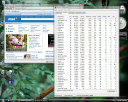
My Windows Vista box starts out at around 12,000 handles on boot up and quickly climbs to 15,000 without really doing anything.  Loading up Internet Explorer 7 takes it up rather quickly to 800 megs of memory and a lot more handles being used.

My concern is that non-power users are going to start bumping up against the handle limit.  The 64-bit version of Vista doesn't seem to have a problem with lots of handles so there is an escape path for the long term.

What I am hoping is that if someone with clout at Microsoft will have this issue brought to their attention and have it dealt with. The handle issue is already a problem for many power users on Windows XP.  It's probably the most common cause of system instability.  With Windows Vista having built in search (which consumes a lot of handles just as Google Desktop does), handles could become a serious problem.

Problem #3: Compatibility

The radical architectural improvements to Windows may come with a price -- compatibility.  First, let me say loudly that it is not fair to judge the final product based on the beta.  But I do know what the compatibility was on Whistler at this stage versus Vista.  And if your response to that is "Yea but Vista is a much bigger change" then realize this -- it doesn't matter to users how big the change is under the covers if their programs don't run.  Windows Vista is supposed to be going to manufacturing in a few months.

Users submitting bugs (and feel free to ask anyone in the beta to verify this) can tell you tales of reporting a bug or compatibility problem to have it closed with a "working as designed".  I know our guys are getting frustrated turning in a well documented, repeatable bugs only to have it seemingly blown off and having it continue to show up month after month (Hey, Logon team, we're all waiting for a replacement API to the Winlogon notify stuff, it's been half a year!).

If you stick with the built in apps in Windows Vista along with very mainstream apps, things are fine.  But as soon as you start venturing out, things get murky.  And I don't refer to desktop enhancement programs (WindowBlinds is running fine on Windows Vista).  It's usually "little things".  My Verizon connection program or some shareware program or whatever. 

As an evil capitalistic developer, poor compatibility is good news "New version! Now works on Windows Vista! Pay up! Whohaaha (singing) I'm getting a boat..a brand..new..boat (/singing)"  But as a user, I am concerned that early adopters may find that many tools and programs they rely on have problems.

This may simply be something that Microsoft can't solve or shouldn't solve. But if that is the case, then Microsoft needs to spread the message that Windows Vista is a truly new version of Windows and some legacy software may need to be updated. I think users will understand that as long as it's communicated effectively before hand.

But for users who can't get their scanner to work or some custom gizmo, or applet that came bundled with their printer or whatever, it's going to be annoying if they had no idea that going to Vista was going to mean that a noticeable chunk of their programs don't run correctly.

Let me show you a screenshot that shows the excellent potential of Vista as well as the current problems:

What a cool utility and yet it also implies we have a long way to go.

Problem #4: Unowned Slop

What the heck is all this crap in my task list on boot up? SVChost wasn't funny in Windows XP when there were 5 of them and it's a lot less funny when there are a dozen of them -- ON A FRESH BOOT UP!  Look at this stuff.  These are all the processes running on a fresh boot up of Windows Vista beta (5381).

Microsoft talks about security but it's just not acceptable that Windows Vista should have a generic process name like svchost anymore.  Each thing that wants a piece of my memory should have to have a name so that we know what it is. A third party could certainly write an application that digs into each svchost and then refeeds it into task list but this really should be part of the OS.  I think it would also put more pressure on the various empires within Microsoft to justify their existence as part of the initial boot.

Most of all, it just looks sloppy.  Clean? Clear? Confident? Some early adopters are going to open this up, see this mess and think "Bloated, sloppy, kludged". Feel free to comment on what your thoughts are on that.  Am I just being anal? Maybe. But I suspect there's a lot of people out there who are going to take having 41 processes on bootup of which a dozen of them are called svchost.exe (as well as various duplicate process names) and not think kindly.

Problem #5: It's Annoying!

There are so  many new "security" oriented dialogs that the entire experience, when coupled with the above mentioned issues take out the "fun" of using the OS.  Want to empty your recycle bin? You need to go through multiple dialogs to do that including a security prompt! Even as a so-called administrator, you can't get into all the folders on your system.  And some of the folders you can get into, you can't write to files in them! Admins have certainly lost a lot of power it seems. See the screenshot of trying to get into "My Pictures" as an admin.

It's really hard to describe in words how annoying it is to constantly be prompted to enter a password or to boost your privileges to do seemingly trivial things.  It interrupts ones workflow, train of thought and well, it just goofs up my groove, man.  Microsoft is working on these issues and they are aware of them, but the recycling bin debacle makes me wonder how such obvious issues could make it so far into the beta process.

So what should be done?

Windows Vista is more important than Windows XP or Windows 2000.  It is an ambitious project that demonstrates Microsoft's ability to innovate.  A lot of people unfairly criticize Microsoft for not being innovative.  Sometimes the criticism is fair but Windows Vista truly is innovative. Even if some of the ideas in Windows Vista got executed elsewhere first, Microsoft had come up with many concepts and ideas first (gadgets may seem similar to Apple's widgets which were similar to Konfabulator's widgets but were all predated by DesktopX by years which was predated by Active Desktop and other concepts as well for instance and the Sidebar gadgets were in the earliest Longhorn builds long before Konfabulator showed up -- though after DesktopX).

But what we need to know is that Microsoft will not rush Windows Vista out for some arbitrary marketing date.  That, if necessary, Microsoft will move the Windows Vista date back even if that makes PC manufacturers scream bloody murder. 

I am not suggesting that Microsoft can't address the concerns I point out there by the time they hope to release to manufacturing.  But I am saying that I think it is going to be a very tense summer in Redmond in order to make the date given where the OS is right now.  When Windows Vista beta 2 comes out for the public, people will be able to judge for themselves and decide what the status of the OS is. 

What are your thoughts?

WindowFX 3 last beta now up

Published on Thursday, May 18, 2006 By Brad Wardell In WinCustomize News

Stardock has released what may be the final beta for WindowFX 3 before it is released to the public.  WindowFX is a program that allows Windows XP users to add a ton of user-chosen special effects to their Windows experience.

WindowFX 1.0 introduced users to alpha-blended shadows for windows on the desktop.  Since then, WindowFX has continued to add new features and new effects.

WindowFX 3 takes advantage of many of the same technologies that allowed WindowBlinds 5 to see such a significant performance improvement over previous versions of WindowBlinds (such as making use of more video card hardware acceleration).

New features in WindowFX 3 include a host of new effects for minimizing and maximizing windows, taskbar thumbnail previews, an alternative Alt-tab previewing behavior, and more.  WindowFX 3 will be $19.95 on its own or can be purchased as part of Object Desktop. 

Users of Object Desktop can download the beta for WindowFX 3 right now.