Brad Wardell's Blog


DOWNLOAD WOES!

Published on Tuesday, February 14, 2006 By Brad Wardell In Galactic Civilizations II

On Tuesday, February 14th users who were in the BETA program will be able to PRE-LOAD the game via Stardock Central.

On Wednesday, February 15th, all users who pre-ordered directly will be able to PRE-LOAD the game as well.

It requires an updated version of Stardock Central that has been designed to make use of our updated server farm infrastructure. So in theory, your download speeds should be very fast.

Stardock Central 2.29a or later is needed. Go HERE to get it.

However, some % of people are going to have problems.  This thread is to make it easier for them (and us) to figure out what went wrong.

Important points:

1) Don't assume the problem you run into is universal.  So if you run into a problem, please report it.

2) Give as much information as you can.   The log info will be important.

3) There are 3 types of failure:

a) Server Time-Out -- this is where you lost connection to the server. We want to know about this as the new server farm should be able to handle 10X what we are expecting. Don't worry though, Stardock Central supports download resume.

User-Validation failure.  This is where the system can't find your information in the database. Is the email address you used to order the same as the email address you used here?   Once your order has been processed (i.e. beta users have already been processed, pre-orders will be processed the end of the day tomorrow) you will receive an email with info.  If you lose this info, go here and put in the email address you think you used to buy the game.

c) Extraction error.  This is where it has downloaded but it fails to properly extract. This should be pretty rare.

We are anticipating a 2% problem level. That is, 2% of users will run into some problem.  That's approximately 100 people from the beta and initial direct pre-order group (we aren't assuming all users will try this out). 

So this thread could get pretty busy.  Stay tuned.

We will begin at around 2:30pm EST.

The Galalctic Civilizations Universe

Published on Monday, February 13, 2006 By Brad Wardell In GalCiv II News

Sometimes game worlds are created for the game.  The result is a game that can feel a bit lacking in the soul department.  GalCiv I, to some of us felt a bit light on the soul side.  It was focused largely on just moving units and research technologies and the actual civiliziations were just a bunch of interchangeable names.

Ironcially, the game back story has been in development for nearly two decades.  When the game was originally developed for IBM's OS/2 operating system in 1993, the game tapped a series of sci-fi stories.  That is where the Drengin and the Torians and the Arceans all came from.

To put it all together and explain the back story and the place where the humans fit in, I've finally put together the Databank entry on the GalCiv universe. 

If you're interested in how the backstory has evolved and changed over the years, check it out.

The Galactic Civilizations Universe

Published on Monday, February 13, 2006 By Brad Wardell In GalCiv Journals

The original back story from 1990...

The universe that Galactic Civilizations exists in came long before the game.  They come from a series of manuscripts that I wrote in the late 80s and early 90s.  The stories were titled:

  1. The Terran Alliance
  2. The Defender
  3. Revenge of the Defender
  4. Twilight of the Morning Star
  5. The Yor
  6. Corruption of the Shard

As well as 3 not-so-completed manuscripts

  1. Guardians of the Telenanth
  2. Draginol
  3. Mascrinthus

Drengin / Terran Wars

The first 6 stories told of the rise of the human race in the 23rd century.  Like most stories, it's character driven. The main character is called DL Bradley, an officer in the Terran Alliance.  As the 23rd century is nearly ready to dawn, the humans have been trying to form a United Planets with the Drengin Empire, Arceans, Altarians, and Torian Confederacy. And for a time, they are actually successful.  All of the 5 major civilizations are part of it.

At this stage, there is no hyperdrive. Ships travel purely via the star gates.  And the Drengin and Arceans had been operating in the galaxy through star gates for nearly a hundred thousand years.  And the Drengin plan to attack the Arceans had been in motion for over 50,000 years.  Since any attack could be thwarted by simply shutting down the receiving star gate, the Drengin hatched a plan to have unmanned drones literally tow via normal space star gates that would be parked within the solar system of Arcean colonies.  So the arrival of the Terran Alliance at the dawn of the 23rd century and their attempts to build an interstellar coalition of friendship, commerce, and trade was more of an inconvenient distraction for the Drengin.  They weren't about to give up their ambitions.  The Drengin had, by far, the largest military in that part of the galaxy (little at this point is known about the rest of the galaxy).

So the Drengin star gates finally arrive at their destinations in 2178. They then proceed to launch their massive attack against the Arcean colonies.  The Arceans, of course, are taken by surprise and lose control of a couple of their star gates.  As a result, most of the Arcean Empire is obliterated.  The Arcean home world and one other colony are all that remain.

Meanwhile, not all is good on Earth.  Human culture has gone through a great deal of soul searching over the past 100 years.  On the one hand, humanity had put itself up as the diplomats and merchants of the galaxy.  But on the other hand, the Terran Alliance had put together a fairly lethal, though small military which protected that commerce.  In fact, many of the minor civilizations such as the Korx and Vegans simply shipped their goods aboard Terran Alliance merchant ships since they could count on their deliveries being safe from piracy due to the protection of the Terran Alliance navy.

Mind you, the Terran Alliance military was nothing compared to say the Arcean Empire's let alone the massive Drengin Empire star navy.  But it was a potent little force all the same.  The leadership on Earth had little inclination to build up beyond this.  After all, the United Planets would take care of any disputes in the future. War was a relic of the past.  This caused some issues with some of the officers in the Terran navy who wanted to see adventure and glory.  One such person was Lorina Gates who was top of her class.  Many humans served as advisors to militaries on a variety of worlds because as nice and peaceful as humans seemed to be, they were considered by many the best tacticians in the known galaxy. 

However, no humans served as advisors to the Drengin Empire.  It was the ambition of many naval officers to be considered so excellent that even the Drengin Empire would want their advice and instruction. 

As the war between the Arceans and Drengin went into a stalemate (because of the limitations of the star gates), Drengin intelligence discovered that the humans had come up with a new type of drive system that would make the star gates irrelevant -- Hyperdrive.  The humans even had a prototype ship called the TAS Defender.  The ship even had a new type of defense called shields.  While all the other ships in all the other militaries defended their ships using various types of armor vs. various kinds of plasma beams, the humans had come up with a way to make their ships largely invulnerable against that type of weapon.  It was believed that the TAS Defender could probably take on, by itself, a half dozen Drengin Battle Cruisers.  If the humans built enough such ships, they could completely alter the balance in the quadrant.  The Drengin needed to get that ship and learn its secrets.

Lorina Gates was not aware of any of this.  The Drengin appraoched her and said that they were indeed impressed with her accomplishments but that they did not trust humans to not be spies.  They want someone who was totally loyal to them.  Lorina was willing to do anything to demonstrate her worthiness.  The Drengin seized on this and told her that she would need to steal the TAS Defender and deliver it to them.  She was not told of the special nature of this ship.  By all accounts, the ship was not that remarkable.  Its weapons were a bit better than most but it was much more lightly armored than the typical ship (since it had shields but she didn't know this).  But they needed to know that she was fully committed to this.

Since Earth had become a decadent pacifist, from her point of view and the war with the Arceans could have ended at any time, she made her choice and sealed her fate.  She, and some other like minded cadets stole the ship.  Not knowing of its Hyperdrive capabilities meant that they literally had to take the Terran star gate network to get to Drengin space.

After doing battle with the TAS Vanguard, an older but very heavily armored ship, the Defender was nearly ready to get away when a Lt. DL Bradley took command after the death of the captain and was able to send a signal to the star gate to malfunction before the Defender could escape.  At this point, the Vanguard crew, far outnumbering Lorina's crew, boraded the Defender.  Lorina was able to escape through a shuttle pod through the star gate still. But the Defender was back in the hands of the Terran Alliance.

The Drengin then declared war.

The first 3 books outline the Drengin war and introduce readers to the mysterious Arnorians (the Arnor). 

The 4th story, Twlight of the Morningstar, tells of the fate of one Arnorian who was helping the humans.  The last two stories deal primarily with the Yor and tie the rest of the stories together, introduce the Iconians and Thalan and resolve the various plot lines.  I won't go into too much detail on those because Galactic Civilizations III will borrow heavily from those particular stories.

The Mithrilar

The other 3 stories take place long long before there were even humans.  It deals with how the universe got started in the first place.  And it fully explains why the Altarians and the Humans look so similar.  The first story deals with how the Arnor came to be as well as how they split into two groups.  The Arnor were a flawed creation.  Their maker could not decide how best to go about creating beings of incredible power to help guide the rest of creation.  The maker of the Arnorians was one of the 5 Mithrilar.  There were originally only supposed to be 4 of them but a 5th Mithrilar came seemingly from another dimension in which the universe was collapsing upon itself.  There was something wrong with him but none of the other Mithrilar could quite put their finger on it. He was simply known as the Dark Mithrilar.

The first 100 Arnorians that were created were immensely powerful and made in the image of the dark Mithrilar.  The next 1,000 Arnorians were similar but less powerful.  And then the next 10,000 were generally less powerful but had two significant differences -- they could reproduce and were insensitive to the passage of time.  The dark Mithrilar was different from the others of his kind because he could sense the passage of time.  A great deal of time is spent considering the significance of that -- ever imagined living 1000 years?  What about 10,000 years? What about a million? Even if you were in perfect health, how long before you went mad?  The dark Arnorian had long gone mad because of this.  But not so mad that he didn't recognize the source of his pain. 

For a long while, the Arnor were content.  But time would do its work.  The Arnor that were sensitive to time slowly became twisted as thousands and then hundreds of thousands of years passed while the other Arnor were completely oblivious to it.  Most Arnor could sit down and ponder a mountain and watch plate tectonics in action. They could sit motionless that long because they had no need for food or sleep and time meant nothing. 

Eventually the twisted 1,100 Arnors began preying on the rest.  They found a way to drain the power from the lesser Arnor and put it into an orb-like device.  This device became ever more powerful as a result of the leeching of power from the lesser Arnor.  In time, the Arnorians fought back and named their oppressors as the Dread Lords.  Or more specifically, the 100 most powerful were the Dread Lords and the rest were simply Dread Knights. 

In the end the Dread Lords were defeated and the few that remained driven off of Arnor.  But the remaining Arnorians were a shadow of what they once were.

Ironically, this story is told as a story by an Arnorian who is found on an alien world called Altaria.  A cataclysm had occurred and changed all of existence and the dark Mithrilar, called Draginol (that's the source of my on-line handle btw), was also on Altaria.

The second two stories deal with the Altarians trying to resist the evil Draginol and his forces and the aid of Mascrinthus, the last surviving Mithrilar other than Draginol.

The ending of this actually sets in motion the original stories creating a loop.

Evolution into the Galactic Civilizations Universe

For a strategy game, the characters no longer were central to the story.  People create their own characters in their games and the civilizations themselves take center stage.

The core elements remain true:

  1. The Drengin Empire and Arcean Empire have been powerful space faring civilizations for eons.
  2. The Torain Confederacy was once enslaved by the Drengin Emprie.
  3. The Altarians seem to have "powers" that we don't quite understand and aren't quite trusted by the humans because they have an almost religious zeal in their actions
  4. The Yor see all biological life as a threat and ultimately are searching for a deeper meaning for their existence
  5. The Korx are still the vile but ultimate capitalistic society -- laisser-faire taken to the Nth degree.

We wanted to create a universe where the Terran Alliance are at a cross-roads. Those clever monkeys from Sol III are pretty darn good at killing stuff but they seem to almost be over compensating by trying to be nice, diplomatic, and polite.  The Terran Alliance had a weapon that none were familiar with -- pop culture.  Their influence tended to spread far from their borders.  There's nothing more frightening than seeing a Torian wearing blue jeans.

Which path players want to take the Terrans is up to them.  And in Galactic Civilizations II, they can take charge of any of the 10 major civilizations or create their own unique one.  So do you play the Torians and go for vengeance against the Drengin?  Do you play as the Thalan who have come from the an alternative future that exists in the Galactic Civilizations III timeline and snuff out the Terran Alliance before they destroy the universe?  Or do you play as the evil Drengin who want to conquer everyone because skin is so good and variety truly is the spice of life.

From Galactic Civilizations I to Galactic Civilizations II

If you didn't play the first Galactic Civilizations, you didn't miss much from a story point of view.  We just didn't have the budget.  I would love to go back and do something about that but that will have to come at some other time.

The Altarian Prophecy helped a little bit but essentially the first Galactic Civilizations game could be summed up as follows:

The humans discover hyperdrive and the technology leaks to the other major civilizations in short order.  Now they must race to capture planets.  However, during this race, the Drengin begin to recognize a threat in the humans.  The humans behave like they just want to unite the galaxy in peace and trade. 

The Drengin secretly prop up a minor race known as the Xendar.  The Xendar become a pretty formidable military threat and launch an invasion against several human worlds.  The goal of the Drengin was to keep the Terrans down and to make clear to the others, particularly the Arceans and the Altarians, that teaming up with the humans would be folly.  After the events of the Altarian Prophecy where the humans showed some military ability against the Korx and Drath in a handful of skirmishes, the Drengin weren't sure what would happen with the Xendar.

The Drengin made sure that the Xendar had the latest Drengin military hardware (disguised) and the Xendar themselves were a fierce warrior society.  The only reason they weren't a major power was because they simply did not get their hands on hyperdrive until too late.  Otherwise they'd have been one of the major civs. 

But then the humans did something that the Drengin totally didn't expect.  The Humans crushed the Xendar ruthlessly.  The Terran Alliance wasn't a paper tiger after all.  Worse, the humans were cunning in a way that the Drengin had not seen in other civilizations.  The Terran military didn't attack with savagery or brutality.  The Terran navy worked like a surgeon cutting the Xendar to pieces.  Within two years, the Terran Alliance had absolutely brought the Xendar to their knees.  Before the Xendar could tell the humans the Drengin's involvement, Drengin agents unleashed a long prepared neural toxin into the air of the Xendar home world killing every Xendar on the planet.  The Xendar are now all but wiped out and not an issue at this stage.  Those that exist in the galaxy blame the humans.

The Drengin now knew, however, that the Terran Alliance had a steel fist inside their velvet glove. They were wolves and sheep's clothing.  But they were also a very young race and not that powerful yet.  Given time, however, and the humans could become the ultimate power in the galaxy.  The only way that could happen is if they were given the time to become dominant.  The Drengin's plan to stop this was to first remove the Terran's friend -- the Arceans.  Then the Altarians would be next and finally the humans.  Left on their own, the humans simply hadn't put together the economic or industrial might to compete against the Drengin Empire.

In 2225, the Drengin were set and the war was launched against the Arceans. But the humans did something unexpected -- they voluntarily came to the aid of the Arceans. No treaty. No obligation. They simply aided the Arceans against "aggression" which the Drengin simply can't grasp why anyone would do that.

Galactic Civilizations II is the main event. The story of the Drengin / Human war and the return of the dark Arnor. We hope you like it.

Schedule of Pain

Published on Monday, February 13, 2006 By Brad Wardell In GalCiv II News

According to the universal code of PC game launches game developers must ensure:

All games, products, and or services that are distributed or rely on a digital/on-line component (e.g. the "Internet") must have a disastrous first few days of availability to ensure that the entire release is tainted.

The level of disaster and general failure of said service must be inversely proportional to the amount of time, effort, and testing that went in to trying to avoid the mandatory fate.

However, the rules do not specify WHEN this disaster must occur.  So there's some wiggle room.  So rather than having the "disaster" and "nightmare" be on Galactic Civilizations II's release date we would like to move it back to be a week BEFORE the release.

So here is what we have in mind:

Tomorrow, February 14th we will open the doors to allow all the existing beta users to begin pre-loading the game. You won't be able to play it as it's just grabbing all the big data files. But it will make sure that on release date your download is only a couple of megs.

For your convenience we will go ahead and create the appropriate posts which will be entitled:

  • "Download woes"
  • "Stardock sucks"
  • "Yet ANOTHER problem! HELLO?!"

On Wednesday, February 15th, ALL users who pre-ordered will then have their orders processed and be able to begin preloading the game as well.  New forum threads will be created:

  • "Where's my email?!"
  • "Stardock drops the ball...AGAIN!"
  • "Class-action lawsuit may be needed"
  • Yep, it's a cluster you-know-what!
  • Didn't they test this?!?!!?111
  • Game is d0med!!!!1

The major issues on Tuesday will be making sure that the updated Stardock Central works, that it handles existing customers well, and that our new server farm is doing what we expect it to (i.e. not timing out on downloads, extracting the files properly, etc.).

The major issues on Wednesday will vary between people who don't get the email with the serial #s and links, can't get their serial #s to work, and of course the people who didn't read any of this, download the thing and are mad because when they click on the icon it thanks them for preloading the game and that the actual final EXE will be available on February 21.

As far as we can tell, everything should go smoothly.  We've gone over it over and over again.  But with thousands of users suddenly jumping on at the same time and with all the different levels of network connection and of course all the people who have 3 different email addresses (i.e. we have two accounts - the Stardock.net account which lets you get on the forums and your order account, we keep them seperate because your order account has order info and that is not allowed by our internal policy to be used outside our store -- we keep that info under lock and key).  So just bear that in mind, if you ordered using one email address and have a different email address here, you may need to do a lookup (Which we'll have available here for you to do).

But the guidelines are clear: No electronic launch can be smooth.  So we figure it best to get it out of the way so that the actual release day is nice.

Strictly voluntary of course.  On Thursday, the floggings begin but there will be a sign-up sheet for that. My skin is very tender...


Race is hardware, but culture is software

Published on Sunday, February 12, 2006 By Brad Wardell In Current Events

I have little patience for racists.  Most racists I encounter fall into two groups:

Group 1: People who are indoctrinated to be racists.  They grow up around racist people and become racist themselves. These are the people who will go to ridiculous lengths to "prove" that one race is "better" than another.

Group 2: People who confuse race with culture.  They'll say "Look at all those <insert racial group here> doing that? They're natural born <insert insult here>."  No. Not true. Not natural born. Perhaps a product of their culture but not of their genetic code.

To use an analogy, ones race is like the hardware of a person.  And while there are certainly minute differences between one race and another due to the pressures of natural selection over the past 100,000 years, those differences are not very significant.  Simply put, humans are remarkably similar genetically.

But culture is a whole different thing. Culture is like the operating system.  For example, if you take two identical personal computers and install two different operating systems on them, they will behave remarkably different. And on that point, I won't cower to political correctness and try to say all cultures are equal. They are not.

I don't even think it's a value judgment.  A culture's ability to produce happy, well adjusted people who live a long productive life has some subjectivity to it but not a lot.  If someone reading this wants to say "Well maybe misery and suffering is 'good' to some people? Who is to say that happiness, joy, physical health, and longevity are 'better'?"  To those people I say, go away and get a life. Let's be real.

Operating system debates are pretty common. MacOS vs Windows vs. AmigaOS vs. OS/2 vs. Linux and so forth.  And indeed, it gets hard to say that one is "better" in all ways than another. Few are.  But in the case of human culture, I don't think it's a MacOS vs. Windows XP type debate.  It's more like a MacOS vs. some machine whose running an OS that requires people to flip switches and put in punch cards.  The differences between some human cultures is so vast that it's pretty obvious that it's not geography or bad luck that caused the discrepancies. It's that their culture is holding them back.

Some cultures simply fail,  utterly, to produce happy, healthy, prosperous, productive people. 

When I see the behavior of the Islamic world, I don't think "Damn Arabs." I don't think there's any significant genetic difference. But I think at this point we can say that the Islamic culture, as a whole, has some serious problems.  It is not as good as other cultures. I mean that.  It's the Vic-20 of cultures. And I'm not just comparing them to the west.

There are several different major cultures on our planet:

  • American liberalism
  • European socialism
  • Japanese
  • Chinese
  • Indian
  • Russian Orthodox
  • Latin American
  • Islamic

These are just the largest ones that come to mind that have a specific identity. There are sub-cultures as well. African-Americanism, Latin American Socialism, Sub-Sahara African cultures, Eastern Europe Orthodoxy/Slavic which is quite different than European Socialism, Australian liberalism.  And even within these various groups, there are different modest differences.  I'm just pointing this out before someone jumps in with semantics and wants to list off the ones I mised.

Most of the major cultures have their pros and cons to them.  Just as we might debate whether MacOS is better than Windows XP, we can debate whether American liberalism, with its consumerism is better than European socialism with its economic stagnation.  Each has its problems.  So for the most part, debating the various major cultures is like trying to debate Windows vs. Linux vs. Mac and so forth.

But it seems to me that the Islamic culture stands out amongst them all as being the most problematic.  It has been this way for my entire life.  I can't remember a time in my 34 years of life where the Islamic World wasn't blowing up something, murdering innocencts, or lashing out at something.  And over what?  There are lots of theories as to why there are Muslim extremists who have a pattern of doing this kind of thing.  I can't think of any other cultures that so routinely and consistently use their people as ordinance. Muslims can't even claim to have suffered particularly harshly compared to other cultures.

My personal theory is that at some level, Muslims know that there is something wrong with their culture. That it fails to produce happy, healthy, prosperous people at anywhere near the rate of other cultures. And rather than trying to adapt (borrow features from) other cultures, it simply blames other cultures and lashes out.

The Muslim riots over the pictures of their prophet being in a Danish newspaper come across as more than just violent. They come across as infantile. A big temper tantrum from a culture that routinely cuts the heads off people, sets fire to the religious and national symbols of other cultures and nations, and intentionally murders women and children whose crime is that they are from a different culture.  If the Muslim world were an individual person, it would be a slow-witted spoiled brat child with psychotic tendancies.

I personally think the world would be better off if Islamic culture were to disappear -- entirely.  I definitely think that the human beings who inhabit the places that are dominated by that culture would be better off (the women definitely would be).  I can't think of a single contribution to the world that the Islamic world has provided in the past 500 years.  You have to go all the way back to the middle ages to find anything and how much of that was due to geography -- the Islamic world is centered around the fertile crescent where much of Indoeuropean civilization started from.

But as a practical matter, people won't stand up and say the obvious: Some cultures are not as good as others. They won't say it because you'll have unscrupulous politicians and opportunists tag those who say it as "Racist" even though race and culture are unrelated.  And because people won't say the obvious, they cannot move people to action.  A worldwide movement to put pressure on the Islamic world to knock it off and grow up would probably do some good.

While the other cultures continue to evolve and improve themselves, the Islamic culture stagnates and revels in hatred and violence.   So yea, you could say I'm a culturalist.  I think some cultures are more worthy than others.  I define "Better" in terms that I think are pretty universal for human kind. Happiness. Health. Longevity. Prosperity. Productivity. 

Masochists wanted: GalCiv preloading this week.

Published on Sunday, February 12, 2006 By Brad Wardell In Galactic Civilizations II

According to the universal code of PC game launches game developers must ensure:

All games, products, and or services that are distributed or rely on a digital/on-line component (e.g. the "Internet") must have a disastrous first few days of availability to ensure that the entire release is tainted.

The level of disaster and general failure of said service must be inversely proportional to the amount of time, effort, and testing that went in to trying to avoid the mandatory fate.

However, the rules do not specify WHEN this disaster must occur.  So there's some wiggle room.  So rather than having the "disaster" and "nightmare" be on Galactic Civilizations II's release date we would like to move it back to be a week BEFORE the release.

Specifically, what we want to do is allow users who pre-ordered it to be able to download the bulk of the game (everything basically but the EXEs and key DLLs).  That way, it'll be the same effect as you'd get on release date -- thousands and thousands of people trying to get the same files at the same time from around the world but still allowing us to keep the retailers from being upset at actually releasing the game before it's available there.

And in this way, all the horrible problems that seem to always happen on these kinds of things can be dealt with before the actual release.  In theory, it should work fine.  But my friends at other game companies have told me the same thing -- they were sure they had made sure everything would be fine and then it was still a cluster..

Stardock will provide the appropriate threads to respond in. We will title them with names like:

"Stardock sucks!"

"Where's my *^%& game?"

"MORE server woes! Hello, Stardock?!"

"Why I will never buy another product from this lame company again"

"Didn't they test this thing?"

By fulfilling the letter of the on-line release policy even if not the spirit, we can hopefully make February 21st much easier.

Biblical contradictions

Published on Saturday, February 11, 2006 By Brad Wardell In Religion

There has been an ongoing debate on another blog over whether the bible has contradictions on it.  On the one hand you have the skeptics. In the middle the realists. And on the other side, for lack of a better word, you have the dogmatics.

There are countless perceived contradictions in the bible. But whether they are truly a contradiction depends on how far you are willing to read between the lines. 

One of the most blatant contradictions in my opinion is the account of how Judas (the betrayer of Jesus) died.  In the book fo Matthew, Judas feels remorse for what he has done, throws his silver coins down and goes off and hangs himself.

But in the book of Acts, Judas keeps the money, acquires a field and falls headling and bursts open his body.

So how do you reconcile these differences?  In my opinion, a reasonable person would say "Oops. one of them is in error."  But to those who obsess over the literal accuracy of every word in the bible then nothing is beyond interpretting or extending to support your fanatical belief.

For example, with regarsd to Judas, the Christian Apologetics Ministry argues:

"There is no contradiction here at all because both are true.  A contradiction occurs when one statement excludes the possibility of another.  In fact, what happened here is that Judas went and hung himself and then his body later fell down and split open.  In other words, the rope or branch of the tree probably broke due to the weight and his body fell down and his bowels spilled out.
     Also, notice that Matt. 27:3-8 tells us specifically how Judas died, by hanging.  Acts 1:16-19 merely tells us that he fell headlong and his bowels gushed out.  Acts does not tell us that this is the means of his death where Matthew does."

But that requires the reader to suspend belief beyond the point where any reasonable person could accept. Here's why:

1) Matthew states explicitly that Judas threw away the money and that the priests then took the money bought a field to bury strangers.  By contrast, Acts says that Judas bought the field and feel "headlong" and his bowels came out.

2) Some argue "well, he didn't die from hanging, that he may have fallen down and that's how he died."  This is really silly because it doesn't say he attempted to hang himself. He hanged himself. Period. If you're going to take the bible literally, you can't start adding your own spin on it.  And if you hang yourself, you don't fall head long. 

3) Another argument I've seen is that well, acts doesn't actually say he died. It just says his bowels gushed out. He may not have died from this.  Please.  At that point, it becomes meaningless.  You fall and your bowels come out, you die.

Common sense says that in one passage, Judas felt guilt, thew away the money, and hung himself.  And the other passage takes the irony path -- Judas the villain keeps the money, buys  a field and ironically dies horribly getting his just deserts.  One is a suicide, the other implies an accident which is a pretty important difference.

This is an age-old debate that pretty much boils down to seperating the zealots from the non-zealots.  After debating the issue myself, I decided to also look to see if others had debated this issue on-line.  In turns out, yep, this particular blatant contradiction has been argued many tiems before.

One writer who looked at it put it like this:

How do these verses contradict each other?

  1. In Matthew, Judas threw away the money to the priests before dying, then he went to hang himself. After that, the priests bought a field. In Acts, Judas used the money himself to buy a field.
  2. In Matthew, Judas threw away the money before dying, and then a field was bought. In Acts, the field was bought before Judas died.
  3. In Matthew, he died by hanging himself, whilst in Acts he fell headlong and his bowels gushed out.

How could an inerrantist Christian respond to these three points? Let me speculate on some possible counter-arguments.

As for point 1, one could infer that when Acts says that Judas bought the field, what is meant is that the priests bought the field on his behalf. This, however, is not permissible, since if one is allowed to change the meaning of the language, no significant discussion about the actual meaning of anything can be conducted. In ordinary language, we do not say that "this man purchased a field for $100" if someone else purchased it for their own usage with money thrown away by its original owner. Clearly, from Matthew, Judas did not give any order for the priests to buy a field for his money, and even if he did, why would they obey him, who they despised?

As for point 2, it seems hard to come up with a counter-argument, since the past tense is used in Matthew ("went and hanged himself"), implying that the execution of the deed had taken place before the purchase of the field. Meanwhile, Acts clearly presents the case where the field is bought prior to his dying (indeed, since he is said to have bought it himself!).

As for point 3, it is logically possible that the story in Acts is consistent with Matthew in terms of the method of dying, but it seems highly unlikely, from how his death is described. If one is to find consistency, one must include many things not in the text. Amongst other things, one wonders how the bowels could gush out simply from his having died by hanging, and one also wonders how he could fall headlong in a field, and where the tree came from (normally, there are no trees in the middle of a field).

Note that it suffices for only one of the three stated contradictions to hold for there to be a contradiction.

In other words, this isn't a new issue.  The handful of people who dogmatically cling to the belief that the Christian bible contains no contradictions have to be, in themselves, willing to essentially add new passages in the bible to fill in the missing gaps.  At which point, the whole argument becomes meaningless.

And this is just one of the more blatant ones. There are plenty of others.  Contradictions in the bible only are a problem if you take the bible literally rather than as a general guide.  Sadly, there are people who cling to the literal words as being infallible.  I personally think that those who do have much less faith than they let on.  If one truly has faith, then such contradictions would be easier to admit to and they'd be able to move on.


Wallpapers have arrived..

Published on Friday, February 10, 2006 By Brad Wardell In GalCiv II News

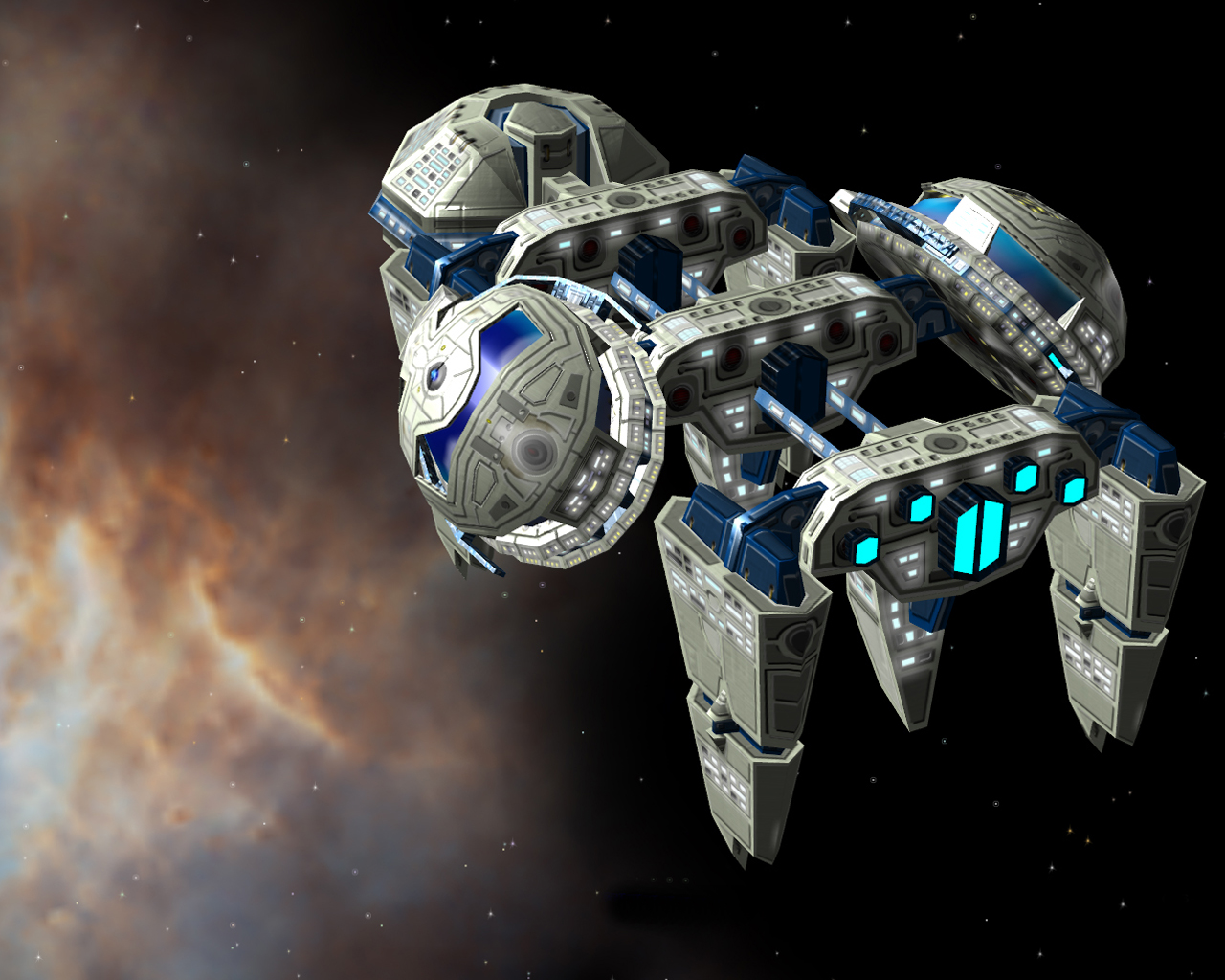
Stardock has released 3 wallpapers for Galactic Civilizations II.  They feature 3 of the robots in high resolution that you may not have seen before. 

It's in the download section here.  We hope you like them. Incidentally, the screenshot you see here is in-game (zoom in on the colony ship) not a wallpaper.

1Up Preview

Published on Friday, February 10, 2006 By Brad Wardell In GalCiv II News

Patrick Joynt of 1Up.com has put up a preview of Galactic Civilizations II.

The new 3D engine is sharp, letting you really dig into the new planet based interface. GalCiv was a game about squares of territory and control of a system at a time; the resolution independent 3D engine lets GalCiv II be a game where influence sets shifting boundaries of territory as control of individual planets changes hands. GalCiv II goes even further than its roughly 50 types of structures with a nearly infinite number of ships available through the ship design feature in every star port. You can put as many science fiction ship bits on as many science fiction ship hulls as you can shake a ballistic, energy, or missile weapon at. Every ship has a limited amount of space -- don't worry, though; the aesthetic bits don't chew up precious hull -- and so you have to pick between not just speed or strength, offense or defense, but between arming and armoring your ships with each of the three weapon and defense types.

The excellent espionage system becomes key as you try to make sure that you pit your fleets not just against enemies that they are superior to, but who they have the right weapons and defense to match themselves against. Each weapon type is a different tree in the newly streamlined and smooth technology tree, so it's important to pick your fights and put your admirals into positions where they can win.

Read the whole thing.  Only 11 days left...