Brad Wardell's Blog


Ars Technica takes a first look at Star Control: Origins

Published on Tuesday, October 18, 2016 By Brad Wardell In Star Control News

Lee Hutchinson at Ars Technica got a sneak peek of Stardock's new Star Control: Origins game.  The first short video of gameplay is with the article.

You can see it all here:

http://arstechnica.com/gaming/2016/10/a-first-look-at-star-control-origins-gameplay-prequel-due-for-release-in-2h17/

It's a great primer on the original series (learn more here: https://www.starcontrol.com/starcontrolclassic) and the challenges of making a new Star Control game.

Lee talks about the much decried Star Control 3 that was released back in 1996. Star Control 3 should be a warning to those who would meddle with someone else's lore. 

Last year, we started the Founders Precursor program. A handful of die hard Star Control fans were invited so that we could discuss both gameplay and how to deal with the lore of Star Control.

On the one hand, we didn't want to retcon any aliens out of existence.  But on the other hand, what do you with Star Control 3 which took the lore of Star Control 1/2 and took it in a...different direction than what most fans would have expected.  We wanted to leave the door open for players to still encounter the Orz or the Spathi or the Ur-Quan potentially in the future in a Star Control game while at the same time ensuring the Origins could stand on its own.

To that end, the Founders and us eventually came to the consensus that Star Control is a multiverse. The first two games revolve around teh Ur-Quan conflict. The third one is a game in a parallel universe that has its own history.  

For most gamers, it doesn't really matter. Most gamers today weren't alive when Star Control 1/2/3 were made.  But we wanted to create a satisfying foundation for those, like us, revere the classic series while at the same time, opening up the pathway to have future adventures with new casts of aliens and adventures created by fans and successors.

Only time will tell if we made the right decision.

Star Control: Origins - Founders Program Phase II

Published on Tuesday, October 18, 2016 By Brad Wardell In Star Control Journals

SCO_Wallpaper-1

Greetings!

Today we are opening up the Founder’s Program to Phase II in preparation for alpha testing (Fall) and beta testing (Winter). 

If you haven’t seen the gameplay teaser, you can check it out here: https://youtu.be/K6ntg47q_cM

We’re still very early in development as you can see.  The creatures and other cool stuff on the planets weren’t quite ready to show yet and we’re saving the best parts for a later reveal.

Feature status

image

Founders will get access to The Vault.  This is where our internal development blogs are kept, lots of not ready for prime time assets and screenshots are shown and the forum where Founders give feedback on what they like and don’t like what we’re doing. 

To join us, visit here.

Star Control: Origins announced

Published on Tuesday, October 18, 2016 By Brad Wardell In Blogging

Stardock is pleased to announce the first new Star Control game in 20 years!

Star Control: Origins is an action/adventure game set in the year 2086.  Earth has received a distress call from inside our own solar system leading to the formation of Earth’s first united space exploration force, Star Control.  The player takes on the role of The Captain to investigate the transmission which leads to the rest of the galaxy learning of the existence of the Earthlings.

Star Control: Origins takes place in a living galaxy filled with thousands of unique worlds, many of which are teeming with alien life. It also has over a dozen star-faring civilizations the player must trade, fight and negotiate with. 

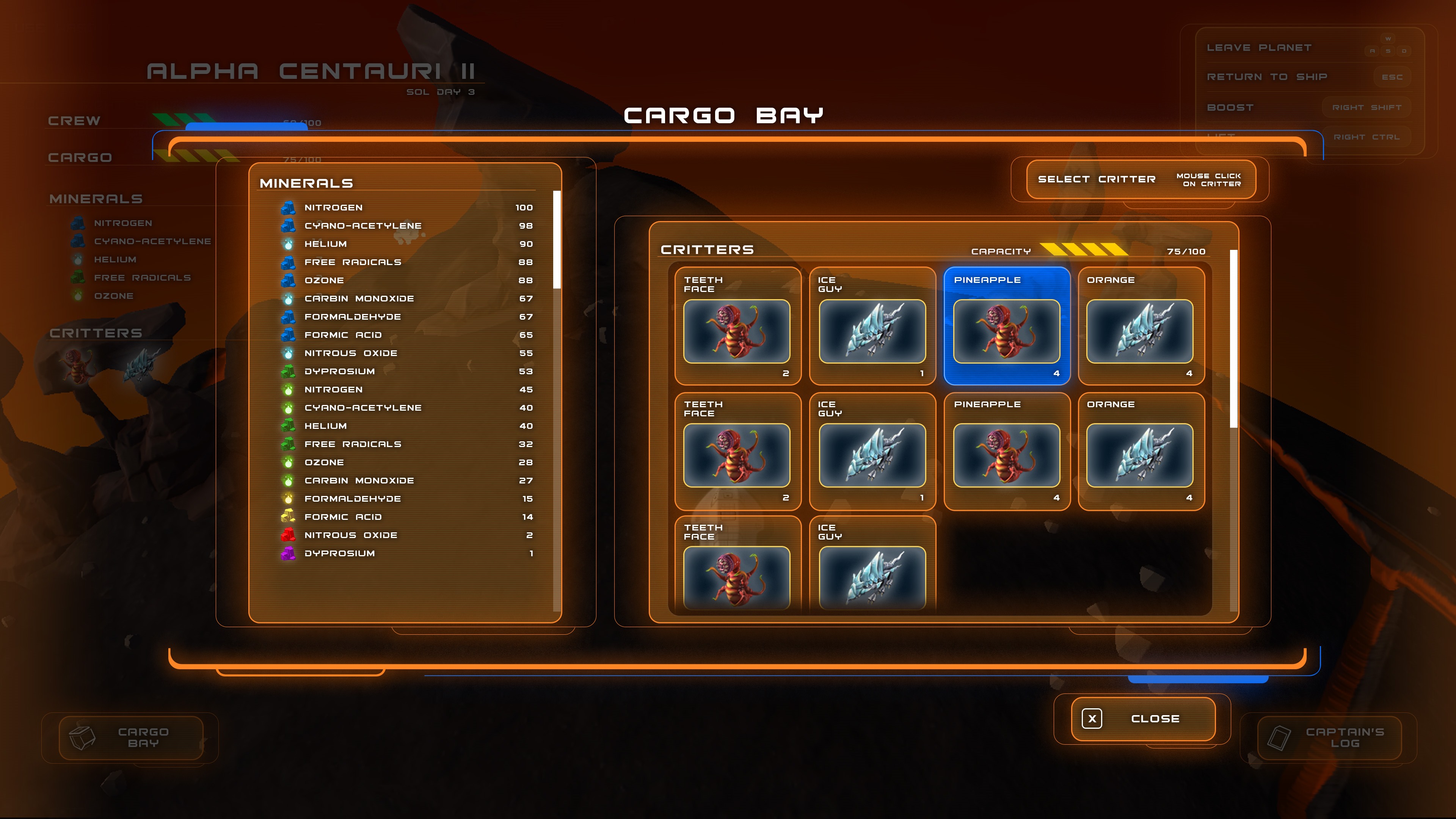
starcontrol_UI_planet3 (1)

“Star Control has always been about creating a fantastic galactic sandbox to play in and weaving a compelling story around it that gives meaning and wonder to their adventure,” said Brad Wardell, Executive Producer of Star Control: Origins. “With Origins, we want to bring the style, humor and game play elements we loved from the classic series and then expand it with features made possible on modern hardware.”

To that end, Star Control: Origins allows players to land on planets that are now represented as spherical entities with the gameplay updated to allow the lander to jump obstacles, rotate their lander’s cannon and deal with hostile environments and creatures.

“Exploring planets is now one of the funnest parts of the game,” said Wardell “The objective is still largely the same, pick up resources, access quests, find artifacts and ship parts but now the gameplay is very engaging.”

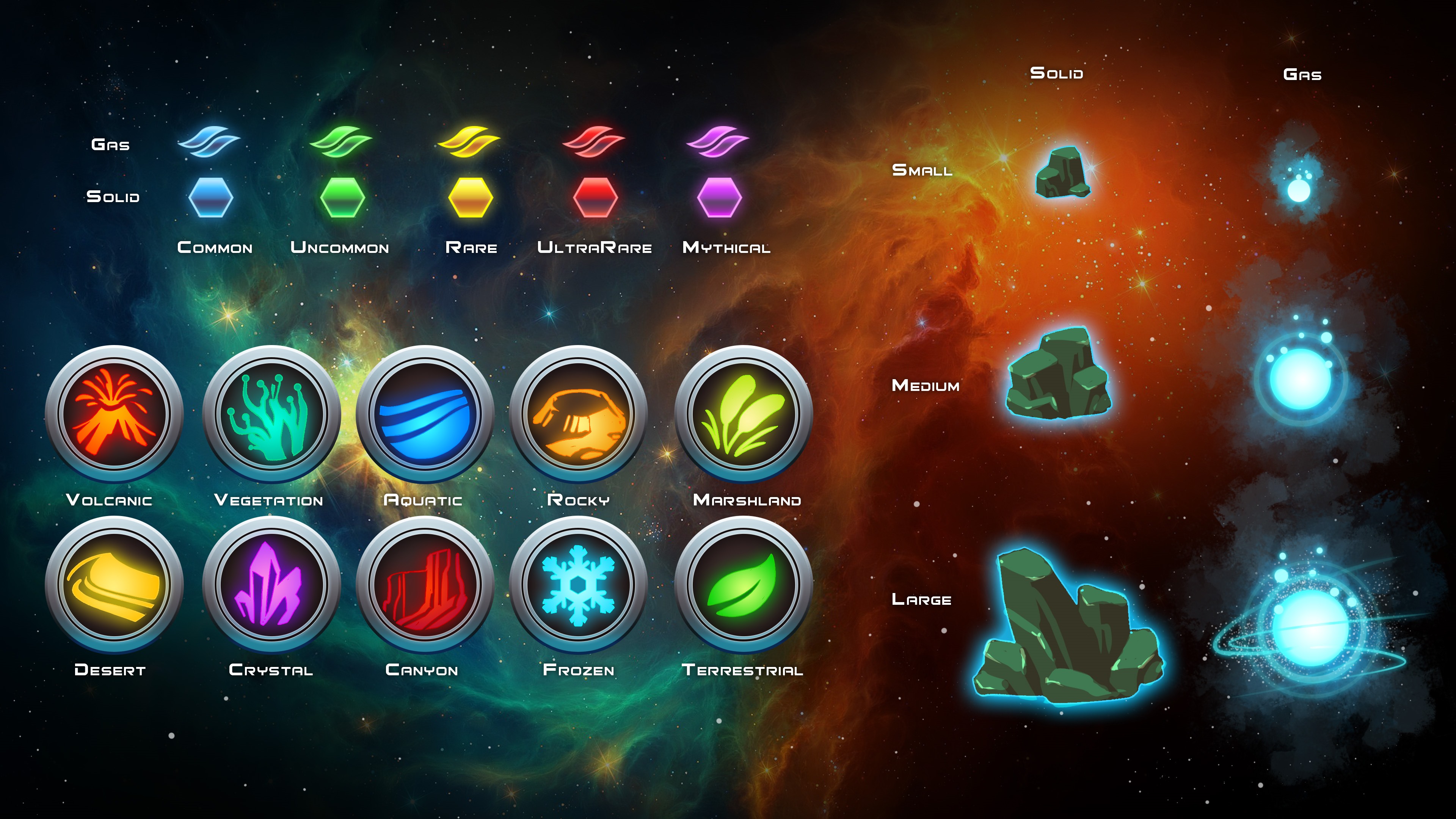
icons2

Like the classic series, Star Control focuses on the player’s interaction with alien races.  Star Control: Origins introduces a new cast of aliens for the player to learn and deal with. Using the game’s dynamic rendering system, the aliens and their speech are rendered in real-time.

For the music, Stardock has been working to reunite the musicians worked on the previous games. For example, Riku Nuottajarvi, composer of much of the music for the original series, has returned for the new Star Control series. 

Meanwhile, for the writing, Stardock has tapped Cracked.com columnist, Chris Bucholz to lead the story and writing effort.

“Star Control is the convergence of a unique musical style, wry humor and a compelling story,” said Wardell. “The next challenge is to combine that with the gameplay to create what we hope will become a classic.”

Today, Stardock opened the Founder’s Program where fans can pre-order the game for $35 and gain access to the Founder’s Vault, a private forum, modding tools and more.

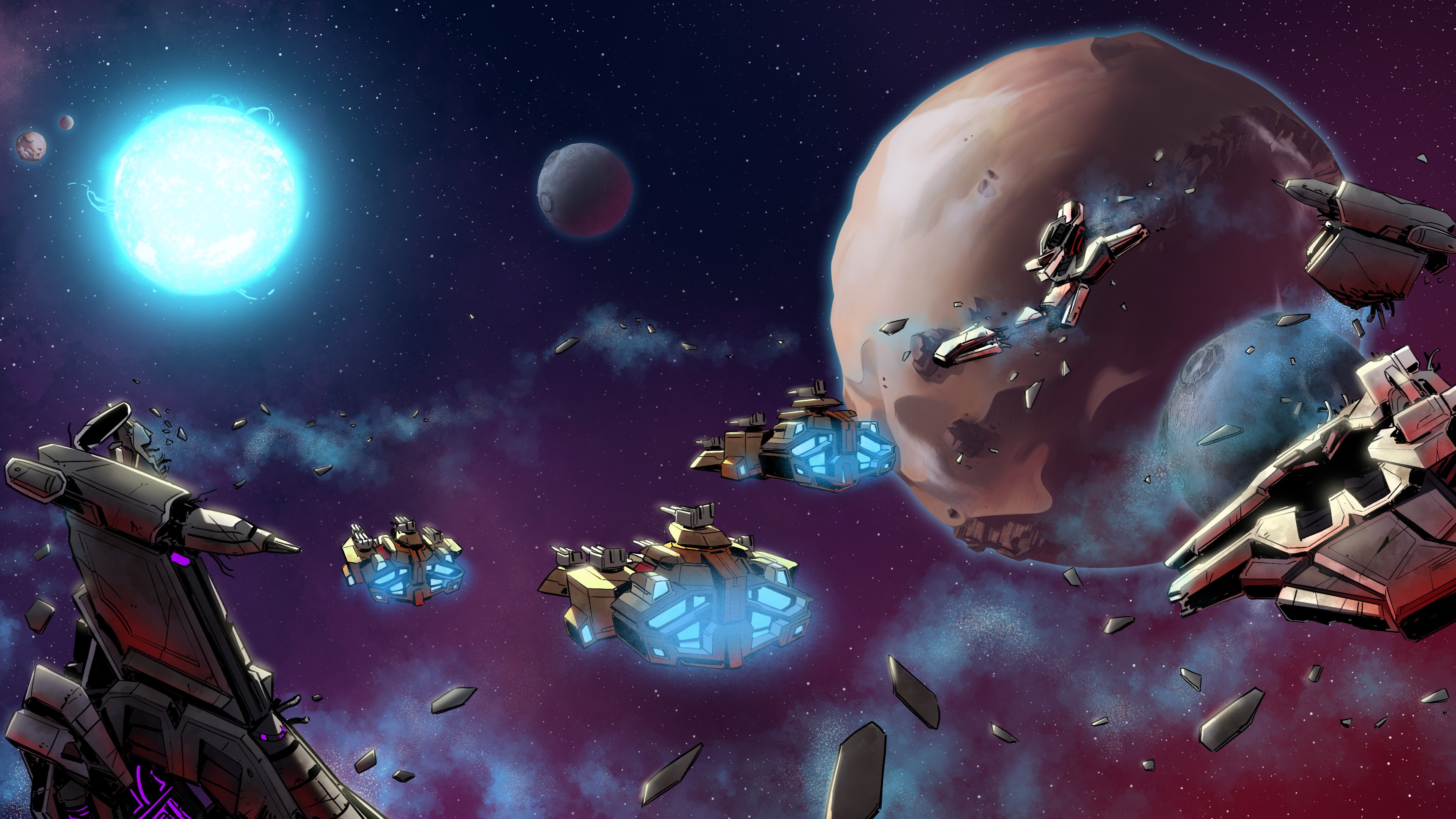
star_control_intro_art6

“There is a fine line between giving homage to a classic and copying it,” said Wardell. “The Founders and us will work together to ensure we thread that needle.”

As a proof of concept, Stardock has released a teaser of alpha gameplay to the public so that fans can get a quick look at the direction the game is taking.

“We wanted to keep the teaser short and not reveal too much,” said Wardell. “Everyone wants to show off Super Melee, planetary monsters, ship design, etc.  But you have to be really careful how much you show this early.  You can easily paint yourself into a box where you feel like you can’t ‘change’ something because it’s been shown to the public.”

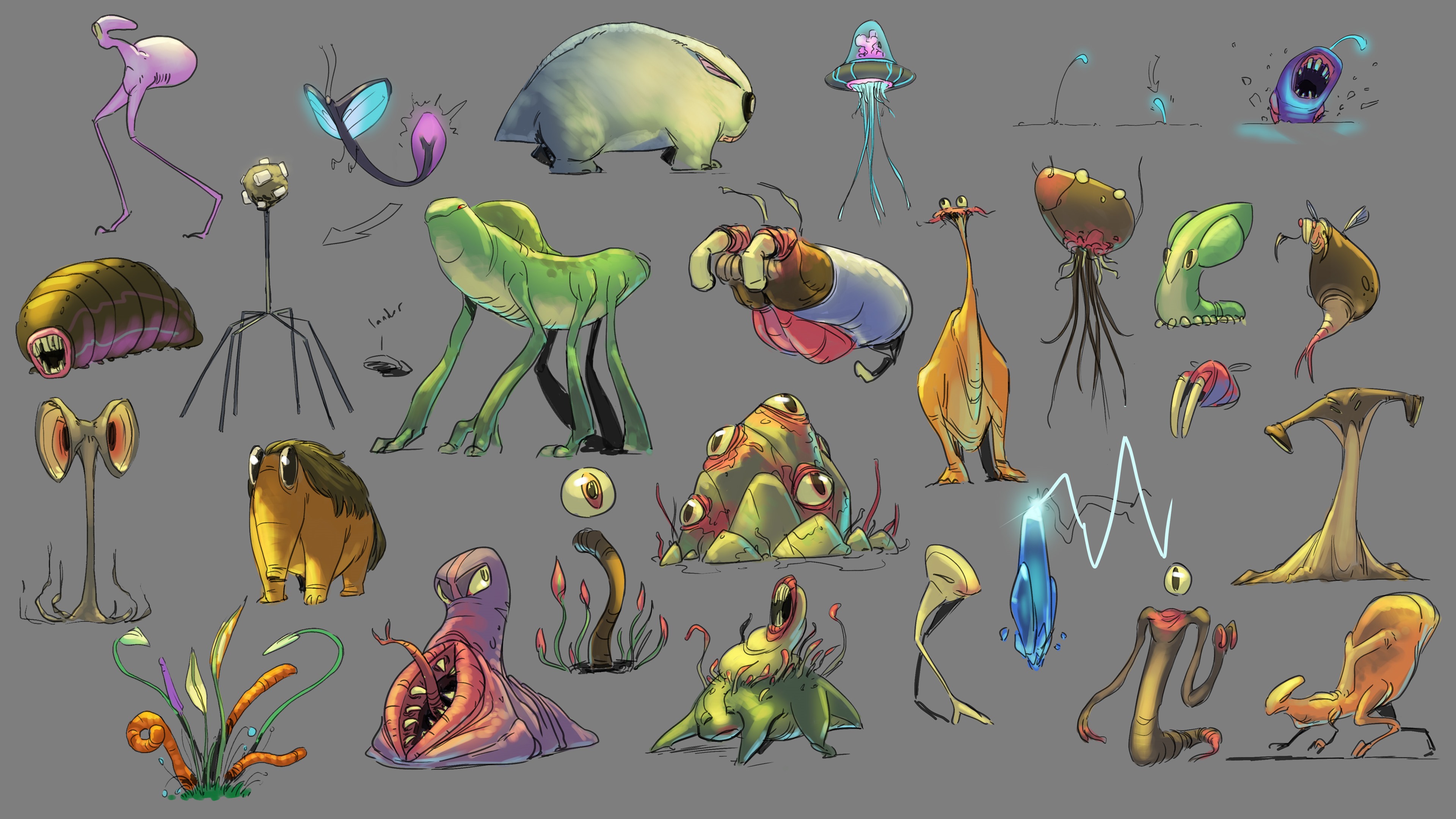
critters1

Stardock is targeting second half of 2017 for the PC release with a console release later.

The website for Star Control: Origins is: www.starcontrol.com

The gameplay teaser is at: https://www.youtube.com/watch?v=K6ntg47q_cM

General Screenshots:

  1. https://www.stardock.com/starcontrol/Screenshots/10-18-2016/SCO_Teasershot-1.png
  2. https://www.stardock.com/starcontrol/Screenshots/10-18-2016/SCO_Teasershot-2.png
  3. https://www.stardock.com/starcontrol/Screenshots/10-18-2016/SCO_Teasershot-3.png
  4. https://www.stardock.com/starcontrol/Screenshots/10-18-2016/SCO_Teasershot-4.png

Additional screenshots:

https://dl.dropboxusercontent.com/u/8051911/Press/SCO_Teaser-10.png

https://dl.dropboxusercontent.com/u/8051911/Press/SCO_Teaser-11.png

Sorcerer King: Rivals the October update

Published on Monday, October 17, 2016 By Brad Wardell In Sorcerer King Dev Journals

image


The first significant update to Sorcerer King: Rivals it out.  Most of it had to do with making the neutrals behave more intelligently (attacking enemies, building things better, etc.).  We also update the UI to make the Ascension spell much more accessible to players.

We also had a pretty major improvement to late game performance thanks to a customer who sent me a saved game who was running into this.  The result is that late game should be much much faster.

We don’t have any immediate DLC plans but we do have some free updates in the works for Rivals including a series of new campaigns we are going to start releasing (along with documentation on how we made them so that people can share their own).  They’re really fun to make and based on feedback, people seem to really like the campaigns.

Stay tuned.

www.sorcererking.com

DEV DIARY: Your game competes against all games from all time

Published on Monday, October 17, 2016 By Brad Wardell In Escalation Dev Journals


EscalationGradient

This is going to be long and go into both Escalation, the development of Ashes of the Singularity and discuss the technological singularity.

Our story so far…

imageThis past Spring Stardock released the real-time strategy game, Ashes of the Singularity.  It’s a game set in the post-technological singularity future in which humans have begun to expand to other planets.  In this future, a single individual is so powerful that they can manage entire armies of semi-autonomous machines called constructs.  In Ashes of the Singularity, the player is part of the PHC (The Post-Human Coalition) tasked with dealing with renegade humans as well as dealing with a new enemy: The Substrate.

The game received generally favorable reviews with gamers praising the adoption of modern hardware to deliver an unprecedented scale to the genre and gorgeous visuals (provided you had the hardware).  But the game was also criticized for having a campaign that felt tacked on, uninspired art direction and a tendency for those thousands of units to end up being a giant unmanageable blob late game due to the game’s insistence on keeping the camera relatively close to the action and a general feeling of missing strategic depth.

In November, we are releasing the first expansion pack, Escalation, which aims to address those criticisms and more. 

For Escalation to be successful, we first needed to think long and hard about some of the basic premises for the game.  And now for those thoughts…

Not a technology demo

image

Since Ashes of the Singularity was the first DirectX 12 game and includes a built in benchmark for testing DirectX 12 thoroughly, it naturally received a lot of coverage for its state-of the art engine, Nitrous.  This caused many people to conclude that the game itself was a technology demo.  And to be honest, while that wasn’t our intention, a pretty decent chunk of our time and budget was spent on the underlying technology to drive the game which naturally meant less time to think about the game itself.

With real-time strategy games, you can’t really escape addressing the technological requirements.  I’ll spare you the details here as I wrote about it, at length over at IGN. So it is true that a lot of our thought was going into how to build Ashes of the Singularity since, for us, Ashes of the Singularity is a long-term project for us.  We strongly believe that there is demand for real-time strategy games, the challenge is to make any new RTS compelling.

imageMisconceptions

It wasn’t until Ashes of the Singularity was released and we started talking to other RTS developers that we realized our market misconception on the genre became fully realized.

Here is the short version: In the age of digital distribution your game competes with every game that has ever been made.

When we released Sins of a Solar Empire in 2008 we were only competing with the other 38 SCUs at Walmart.  What some other RTS had in the past was irrelevant because it was not competing with us for sales.  Sins of a Solar Empire didn’t have to compete against a Homeworld: Ultimate Edition or really even Supreme Commander: Forged Alliance (other than at the beginning). 

Ashes of the Singularity was released fully realized. Every unit, map, etc. was planned from the start.  We added a campaign (something Sins didn’t have) a couple months before release because players wanted one.   So from our perspective, Ashes of the Singularity was the most mature new game we’d ever released.  Months of QA and testing along with great support from AMD, Microsoft, Intel and NVIDIA meant the game wasn’t buggy on release.  Both races came with about 15 units each, a strong AI and lots of maps.  So great right? Wrong.

Your game competes against every game ever

Game Price on Steam
Company of Heroes  $19.99
Supreme Commander: Forged Alliance $14.99
Age of Empires II HD $19.99
Ashes of the Singularity $49.99

One of these is not like the other.

The argument “But Ashes of the Singularity is new!” is not very compelling on its own. 

The player wants to know “Why should I pay $50 for your game when I can get these other games, that have a lot more stuff, have been vetted for years, have established communities are less than half the price?”

Ashes vs. The World

So what makes Ashes of the Singularity distinct?

  1. Ashes of the Singularity can support huge world-wide armies…But SupCom: FA supports pretty large armies and has strategic zoom so managing them is easy.
  2. Ashes of the Singularity has true line of sight…But Company of Heroes has that too and takes cover and position into consideration for calculation damage.
  3. Ashes of the Singularity has a really good single player sandbox with great AI…but Company of Heroes has pretty good AI too.

In fact, if you were to make a table of features comparing recently released RTS games to the classic and the comparison chart looks pretty brutal right now.  It’s not that the RTS market has died, it’s that new RTS games don’t compare well against games with $20 million+ budgets from the past. 

What Ashes has going for it is technology.  It is a brand new, 64-bit, multi-core, 4th generation engine.  The first of its kind.   What it needs is time to build up the content and refinement of the classics.

Unfortunately, it was released under the old retail model. It’s a new, fully featured game and thus is $49.99 – the same price or less than other new RTS games when they were released at retail.  That model no longer works.

Finding your niche

The original plan for Ashes of the Singularity was that it would be a roughly 15 unit per faction game with DLC and expansions adding new races, maps, naval (add say 4 naval units) and stay very accessible as a strategy game.  In our PR for Ashes, we talked about Ashes being a “reintroduction” to the RTS genre for a new generation.  With hindsight, that’s breathtaking naiveté.  People interested in dipping their toes into the RTS market could try out Supreme Commander 2 for $5 during the next Steam sale.  Even if youdon’t like Supreme Commander 2, you must admit that it does a pretty decent job as a casual introduction to RTS games (92% review score on Steam btw).

For Ashes of the Singularity to succeed, it has to find a niche that can leverage its strengths that no other game has now or is likely to have in the near future:

  • No one can touch Ashes AI potential. The engine scales almost linearly today to 10 cores. We are not aware of any other RTS that scales beyond 2 cores. That means the AI can keep getting more sophisticated over time.
  • No one can touch Ashes potential for strategic depth. Potential being the operative word since it doesn’t have that today.  From a simulation point of view, Ashes can do crazy complex stuff.  The game needs to evolve in that direction.
  • No one can touch Ashes visual potential presently.  5K montiors? 8K monitors? Ashes loves them.  HDR color? Vulkan? Movie quality lighting? Ashes can do all of that and more. 
  • Ashes has amazing modding potential if we can get tools and exporters to the community.  With 64-bit memory and a data driven engine, modders could literally recreate every RTS they ever wanted. We just have to build the tools for modders to do this.

But the key takeaway is niche. It has to find its own niche.  You can’t be all things to all people when you’re competing against every game ever made.

Escalation vs. Ashes

By this Summer, we realized we had two different paths we wanted to take simultaneously.  We still wanted to have an RTS that acted as a good modern introduction to the genre.  One that was constantly supported with improvements and updates but also kept fairly approachable and inexpensive.  We also wanted an RTS with immense depth and detail that was most definitely niche in its demographic.  This game would target the experienced RTS gamer who has always wanted to run a world wide war against lots of opponents and deals with lots of resources and strategies and doesn’t feel rushed. 

From these two contrary visions we got:

Ashes of the Singularity (the base game)

and

Ashes of the Singularity: Escalation

Supporting early adopters

The idea of pricing Ashes of the Singularity to compete on price at $19.99 sounds great on paper until you remember that a lot of people paid $49.99 for the base game.  They have to be made whole otherwise you are punishing your most loyal fans. How do address this?

Because we know the Founders and those who were in Early Access we can do something for them: Give them all the DLC for Escalation until they get enough DLC that it more than makes up for the price difference.  Whether that be a year or three years.

imageEscalation Design Premise

I’m going to be up front about this.  Escalation isn’t for everyone.  We are adding a lot more units. A lot more map types. We eventually will be adding more types of resources along with more units that will require those resources types.  There will be units you build that you will automate to go and do things for you.  In short, you will be building a machine. It’s an RTS with a lot more depth than the base game.  That’s another reason why the base game will continue to be developed and evolve too because some people will want a simpler, lighter RTS.


Next up: What’s new!

Star Control: Origins from there to here

Published on Saturday, October 15, 2016 By Brad Wardell In Blogging


What is Star Control?

Star Control is an action/adventure game with strong RPG elements in which you are the captain of a ship that travels across the known galaxy. Along the way, you will meet strange new aliens, explore fantastic worlds, fight starship battles, upgrade your ships with exciting new components. The galaxy is an open world sandbox but there is also a larger story to take part in as well. 

The History

In the late 80s and early 90s, the Star Control trilogy was published by Accolade. The two two in the series were developed by Toys for Bob with the third developed by Legend Entertainment.  It is considered by many to one of the best games of all time.  The closest thing it’s gotten to a modern day sequel is probably Mass Effect.  If not for Star Control, there probably wouldn’t have been a Mass Effect.

So if Star Control was such a great series, where are the sequels? Ah, there you get into unstable world of the games industry.  Accolade, the publisher, went out of business in 1999 and the Star Control rights went to Infogrames and then Atari. toys for Bob was ultimately acquired by Activison where they make Skylanders. Legend Entertainment went on to make Unreal expansions before closings its doors in 2004.

None of this would have stopped someone from making a Star Control style game.  Bioware made Mass Effect. There was also Space Rangers II. But the primary obstacle is technology and budget.  Star Control is 3 games in one – a planet exploration game, a ship combat game and a space questing game.  Each part being substantially different from the other.  There is no single game engine that is designed to handle all three elements without compromising.


image

Star Control: Alien dialog (1992)

image

Star Control combat (1992)

image

Star Control planet exploration (1992)

image

Star Control questing (1992)


Stardock’s involvement

When Atari filed for bankruptcy, Stardock the developer and/or publisher of space games like Galactic Civilizations and Sins of a Solar Empire acquired the publishing rights to the existing series and associated trademarks.  The stage was set for a new Star Control game but building such a game from scratch would take time.

Development

Stardock began by building a new studio in Towson Maryland.  Recruiting veterans from around the industry, the design required a careful balance between the old and the new.  The team wanted to avoid the game coming across as a retro game but at the same time, didn’t want to make something that didn’t capture the gameplay we loved.

The Team

The Star Control team

During the design, a lot of ideas were considered.  How should the planet be handled? How about ship combat? Internet multiplayer? How should the aliens be handled in face to face discussions? What would be the minimum hardware requirements?

We got some lucky breaks during all this.  Stardock Towson has roommates.  Namely, Mohawk Games and Oxide Games.   A large percentage of the teams were veterans of the Civilization IV and V franchises which brought unique visual and technical skills to the project.

drenkend

Rather than pre-rendered aliens, the aliens would lip-sync and react in-real time in engine ala Civilization V/VI.

LanderGameplay6

Early prototype of the planet lander. Planets would be relatively “small” and be designed to be quick and fun to play on.


image

Exploration and combat could be handled in the solar system.


image

Alien conversations would be in-engine, real-time animation

image

But many touches can only be solved with a lot of iteration.  That’s where the Founder’s Program comes in

The Founders: Precursors

When you make a high profile game, you can either listen to criticism in a controlled environment before the game ships or…you can wish you had done so after your game ships.  For Stardock, that’s where the Founder’s Program come in. 

The purpose of the Star Control Founder’s program is two-fold. 

The primary purpose is to make sure we’re on the right track.  Everything from readability of text (see screenshots above) to game pacing to story and lore handling gets feedback from the Founders.  On a game like Star Control: Origins, this is paramount.  Getting one game done right is hard.  Getting three games right simultaneously and have them work together is extremely difficult.  Moreover, Star Control is a unique franchise in that each developer has brought their own lore to the table and that can be quite delicate.

The secondary purpose is straight-out funding.  Star Control: Origins is the biggest game we’ve ever done.  Its budget is greater than Sins of a Solar Empire + Galactic Civilizations III + Ashes of the Singularity + Offworld Trading Company combined.  This isn’t the kind of game where you can just reuse code from your other games. It’s all has to be made from scratch. 

The underlying engine: Nitrous

Star Control is immensely important to us. It is very important to me personally. My game development hero is Paul Reiche. You may not know him but he may be the greatest game designer you haven’t heard of. His game designs are unique beyond comparison.  He worked on Mail Order Monsters, Archon 1 and Archon 2 and more recently Skylanders.  If it weren’t for him, I doubt I’d have gone into game development.  So Star Control has to be done just right.  So when it came to an engine for it, we needed something that was both powerful and battle tested.  That engine is Oxide’s Nitrous engine. Ashes of the Singularity used it.  Now it’s ready for Star Control.  With Nitrous, we can deliver lighting effects (see the gameplay teaser) that you’d normally see in movies but still do it on relatively modest hardware.  You won’t need a monster machine to run Star Control: Origins.

The Founders: Phase II

On October 18th, we’re opening up the Founder’s Program to the fans.  Those who join will get access to the Founder’s Vault and Founder’s forum which will outline just how big a difference the handful of Founders we started with have had already.

Where the Precursor Founders helped us with dealing with the lore conflicts between Star Control 1/2 vs. 3 vs. Origins, how Super Melee should be handled, what place the planet exploration should have in the new game the Phase II founders will be directly involved in the Origins Story, Super Melee play testing. Making sure our hardware requirements stay low (i.e. if you have a crummy machine, as long as it has at least 1GB of video memory, we want you), pacing and more pacing. 

Our target release date is in time for the 25th anniversary of Star Control 2.  But that isn’t a promise. If necessary, we will push that date out if the Founders don’t think it’s ready yet.  People will forgive delays. They won’t forgive games released before they’re ready.

So visit us at www.starcontrol.com.  Join the adventure!

email1013

Published on Thursday, October 13, 2016 By Brad Wardell In Blogging


Greetings!  We have some news regarding Soren Johnson’s Offworld Trading Company we wanted to share.


## The Steam Sale ##

Civilization IV designer, Soren Johnson’s popular new economic strategy game, Offworld Trading Company, is on sale this weeked on Steam for 66% off!

http://store.steampowered.com/app/271240/

Offworld Trading Company (OTC) is based on the premise that we do get to Mars in the not so distant future and set up a colony and now a handful of the world’s most successful entrepreneurs have been invited to set up companies on Mars to help provides products and services both to Mars and back to Earth.  You, naturally, are one of those invited.

OTC is a real-time strategy game. Instead of winning through armies and tanks, your weapons are market forces and shrewd business tactics.  I know that may not sound exciting on paper but in practice, it’s pretty pulse pounding fun and has built a growing and dedicated fan base thanks to things like daily challenges, a strong multiplayer community and honestly, because there turns out to be a lot of people who have wanted to see a game take on business warfare as a setting.

## New DLC is coming ##

We are also going to be announcing a new DLC shortly.  Please contact us if you’re interested in covering Offworld Trading Company in more detail.  Soren Johnson is also available for interviews regarding his plans for Offworld Trading Company, Mars, and more.


## Screenshots ##

(you can link to these or use them locally as you see fit)


image

Offworld Trading Company: The Ceres Initiative, brings the game to the asteroid field between Mars and Jupiter


image

Offworld Trading Company thrives on its randomly generated maps and replayability but also includes a campaign

DEV DIARY: Escalating the RTS

Published on Tuesday, October 11, 2016 By Brad Wardell In Escalation Dev Journals


ESCALATE ON NOVEMBER 3

On November 3, Ashes of the Singularity gets its first expansion pack: Escalation.  It’s a stand-alone expansion which means that if you don’t already have Ashes of the Singularity, you can just buy Ashes of the Singularity: Escalation and get everything that’s in the base game too.

image


TOTAL ANNIHILATION vs. SUPREME COMMANDER

There are a lot of reasons we decided to separate the base game from Escalation.  Much of this came from how the game developed during the beta period.  For those of you who weren’t part of the early access program, we had very heated debates regarding the direction the game should go....

Continue Reading...

DEV DIARY: GalCiv III & Other Languages

Published on Monday, October 10, 2016 By Brad Wardell In GalCiv III Dev Journals


Right now, Galactic Civilizations III supports:


  1. English
  2. French
  3. German
  4. Russian


Because of the way we made Galactic Civilizations III, translation is very expensive.  There are a lot of words.  But nearly all of it is in the technology descriptions.

image

In this screenshot you see the short-description.

image

And this one shows the long description.

Translation costs by the word.  That long description has 38 words and each civilization has their own tech tree and each tech tree has hundreds of potential techs.  Thus, translating to the other languages we want to translate to costs tens of thousands of dollars.

Now, in the bigger scheme of things, this isn’t that much money.  But there are definitely languages where we won’t make that back.  So we have to put some thought into it.

So which languages should you translate to?  There’s a lot of data on that so I won’t bore you with the details.  But let’s look at what some other games translate to.

Here’s Stellaris:

  1. English
  2. French
  3. German
  4. Spanish
  5. Polish
  6. Portuguese
  7. Russian

Here’s the new Master of Orion:

  1. English
  2. Russian
  3. French
  4. German
  5. Czech
  6. Japanese
  7. Portuguese
  8. Turkish
  9. Polish
  10. Korean

Here’s Rocket League:

  1. English
  2. French
  3. Italian
  4. German
  5. Spanish
  6. Dutch
  7. Portuguese
  8. Japanese
  9. Korean
  10. Russian
  11. Turkish

And it would be insane not to include Civilization VI:

  1. English
  2. French
  3. Italian
  4. German
  5. Spanish
  6. Japanese
  7. Korean
  8. Polish
  9. Portuguese
  10. Russian
  11. Chinese

Meanwhile, Ark? It supports 21 languages, all with full audio.

But none of that can hold a candle to Counterstrike: 25 languages.

image

Steam page translated

image

MOO: Steam page in other languages

image

GalCiv III: page translated

What to support and how much?

For one thing, the largely redundant long tech description is not something that really needs to be translated.  It could just use the normal description. This is what most games do (as in, nearly all games).  We just tend to be a lot wordier.  We’d continue to support the 4 languages we have but then add:

  1. Italian
  2. Spanish
  3. Polish
  4. Portuguese
  5. Japanese
  6. Korean
  7. Chinese

We’d do the first 4 soon and the last 3 later since those would require some changes to our UI system to fit.

We live in a world of many languages and that’s a good thing.  Language is the key to culture and makes our world a richer place.  I just wish it was less expensive to translate it all. Smile


Screenshots of the week:

image by starmac45


imageby Radaney


imageby 41ndigo

Intel Device Advisor Scorecard

Published on Sunday, October 9, 2016 By Brad Wardell In Blogging

If you are like me you are probably the guy that people call for help on their computer.  Recently, I discovered the Intel Device Advisor.

image

It’s as brilliant in its concept as it is straight-forward in its implementation.

Here’s how it works:

You download it and run it.  It stays in the background for a long while (as in, days).  It then reports to you, based on your uses, things you might need and where you can get them.  This is something Windows should, frankly, come with.  It’s still relatively early in its development – not on the tech side but on the offerings side. But for example,  imagine if a relative is complaining that they’re always running out of disk space.  This app, itself, won’t fix that.  But instead, would promote a series of disk space optimizers (hint, hint, Intel <g>) or alternatively detect that your motherboard has an M.2 slot and recommend a compatible M.2 drive that even casual users can probably handle putting in (terrible name, M.2, it’s basically a tiny little drive you plug into the motherboard).

My next PC

Where it really shines though is handling the #1 question I get asked: What should I get for my next computer?  This app will literally configure one for them from various third parties for them. It seems almost like magic. Seeing iBuyPower and Asus with really specific configurations on an Intel page is a bit surreal.

This app is still early but I am pretty excited that Intel’s hardware knowledge paired with third party vendors could make dealing with the giant PC ecosystem a lot easier.

739 pages 51 52 53 54 55 56 57 58 59 60 Next