Brad Wardell's Blog


Ashes of the Singularity: Road Map 2019

Published on Wednesday, January 23, 2019 By Brad Wardell In Escalation Dev Journals

Greetings!

Lots of exciting things happening with Ashes of the Singularity.  With Star Control: Origins released, we've been able to give Ashes some new attention and I wanted to use this post to update you on where we are.

Engine porting

Under the game is the game engine which in Ashes 1.0 was pure Nitrous.  These days, we have taken the Nitrous engine and integrated all the cool stuff we've developed over the years (Game engine wise) to create a game-specific engine we call Cider.  So right now, we're porting Cider to Linux with Ashes being our first test.  

The good news is that we have Ashes kind of sort of working natively on Linux.  The bad news is that the performance isn't quite there yet.  Vulkan is the graphics platform we're targeting and it's still very young.

New entries in the universe

We are working on a new game in the Ashes of the Singularity universe that we will be announcing next month.  Ashes founders will get it either for free or at a steep discount depending on what type of Founder they are.  

Ashes sequels

So the short version is that we aren't going to be making new expansions for Ashes of the Singularity I.  There might be more DLC but the changes we want to make are a little too radical to have as an expansion.   My next post will be talking about what we have in mind for the sequel so you guys can opine on it.  But if you liked SupCom or TA then you will really like where we want to take the sequel.

Stay tuned!


Stardock Magazine: January 2019

Published on Wednesday, January 16, 2019 By Brad Wardell In Stardockians

## Contents ##

  • Star Control: Origins
  • DeskScapes 10 Preview
  • Galactic Civilizations III: Retribution is coming
  • Sins of a Solar Empire: Minor Factions arrives

Happy New Year! We've had a busy start to 2019 here at Stardock and we can't wait to share all of the exciting things that we have happening with you.

We have a whole bunch of new software and games coming up, plus we're working on some really cutting-edge new technology that we hope to be able to publicly talk about in the relative near future.

## Star Control: Origins ##

Last year, we released one of our most highly anticipated games ever: Star Control: Origins. Players have been loving the immersive (and hilarious) story, the exciting ship-to-ship combat, and the unique cast of aliens and characters they’ve been able to meet throughout the course of the game.

In December, we released Aftermath, Part 1 of the Earth Rising season pass for Star Control: Origins. This 4-part pass covers humanity’s quest to establish themselves on the galactic scene among their new found alien allies - and enemies.

In Aftermath, Star Control has ordered the construction of a new Star Control base in Epsilon Trireme. Not every alien is happy about the prospect of an expanding human empire, however, and already the efforts there have run into trouble.

Meanwhile, a group of suspiciously helpful aliens have informed you of a potential new ally: the Gloosh, who are, quite possibly, the laziest aliens in the universe. On top of it all, a new enemy appears in the shadows, one who seems to have their own long history with humanity…

The Star Control: Origins universe is vast - so vast, in fact, that you can spend hours exploring outside of the main story. Each part of the season pass enhances the main game even further and branches off from the many different subplots that you’ll encounter as you play. We brought back the extremely talented Chris Bucholz (who wrote the entire main story plot) to work on Earth Rising. We can’t wait for players to experience what he has in store for them with these adventures.

Following Aftermath, three more parts will release for the season pass. Purchasing Earth Rising will give players access to all of them, but they won’t all be available right away. The release schedule is as follows below:

Part 1: Aftermath (Now Available)
Part 2: The Lexites (NEXT! Winter 2019)
Part 3: The Syndicate (Spring 2019)
Part 4: Earth Rises (Summer 2019)

Check out the Earth Rising trailer here. If you don’t already have Star Control: Origins, you can pick it up on Steam. For more information, visit www.starcontrol.com.

## DeskScapes 10 ##

Object Desktop is due for some major updates this year.  The first program to get a major update will be DeskScapes.

One of the big changes will be the cloud integration to make it easier to find not just animated wallpapers, but wallpapers of all kinds, and use them easily on your desktop. We have a bunch of new features as well that we'll be showing off as we get closer to release.

If you don't already have Object Desktop, we currently have it on sale for $29.99, which gets you not just DeskScapes (and the beta for v10), but Fences, Groupy, Multiplicity, Start10, and lots of other programs to improve your Windows user experience. 

Visit www.objectdesktop.com to get it.

## Galactic Civilizations III: Retribution announced ##

A major new expansion pack for Galactic Civilizations III has been announced.  I don't want to bore you with the marketing speak, so let me get right to the good stuff.

Many of you here who play games have Galactic Civilizations already (at least some version of it).  The new expansion pack, Galactic Civilizations III:  Retribution is essentially designed around making the game a lot more interesting during your play-through.

Here's the problem with 4X strategy games: There are times they're really fun (like at the start) but there are periods where they can get bogged down.  That's why 4X games tend to be a bit niche. With Retribution, what we did was spend a lot of time playing through and figuring out what points in the game felt like they needed something.

So, here is what we came up with:

First, early game there aren't enough strategic paths.  That is, most people just colony rush.  

Second, mid game you would have many new colonies that were just building up but they weren't that worthwhile.  Thus, you would end up with a lot of "next turn".

Lastly, the late game grind.  This is a big problem in 4X games in particular.  Just getting units around quickly on large maps was a chore.

So, how are we addressing these challenges in Retribution?

Artifacts. As the game begins, scientists have begun finding Precursor artifacts scattered around planets. Even Earth has one. So do other planets. These artifacts, when controlled and activated, give your civilization specific powers. Some big, some small. One artifact, when activated, might randomly teleport a ship across the galaxy. Another one might simply uncover a selected area of the map. And still another might finish a technology.

These artifacts allow you to control the pacing. It costs a lot of resources to activate an artifact to give it a "charge." Do you use that artifact immediately, or do you hold onto it for later? For instance, do you want to get an early tech to give you an immediate advantage, or do you hold onto it until later where some key tech might take 20 turns?  

Cargo Ships. The second problem we've run into and tried to solve (and failed) in the past, is getting colonies built up reasonably fast. The way we've done this before was to have your population increase really quickly.  As in, literally, like 100 million people per turn on a new planet. Let's...try not to think too much about that. But the alternative was to make colonies useless compared to your home planet.  

In Retribution, we've introduced Cargo ships. It is, in hindsight, an obvious idea. Simply build cargo ships filled with processed goods, send them to your colonies, and give them the production directly. Now, population can increase a lot more slowly which means that playing "tall" (small but powerful empires) becomes a lot more viable.

Hypergates. Nearly all space strategy games, including Sins of a Solar Empire, have phase lanes and such between destinations. Galactic Civilizations is one of the few that actually lets you travel in true space anywhere you want. Now this is good and all, but in the late game it can be tedious to travel across large maps.

At various times, we had technologies that made all your ships fast or, alternatively, you could design your ships to be really fast. On paper, this should be fine, but in reality it's tedious at best and frustrating at worst.  The solution: Hypergates.

This requires a picture:

When you build a hypergate, you can connect it to any other hypergate and it will create a hyperlane between them.  Yes, we use the word "hyper" a lot but it could be worse: we could use "quantum" everywhere, as that is the new hip word these days.  Wait. Quantumgates! Nevermind.  

Anyway, your ships don't need to travel to a hypergate to use them. They will simply go to the nearest hyperlane and travel that way if it's faster to take it (you don't have to do anything, the path finding will automatically use them if it's the faster way to get to your destination).

Hypergates are very expensive to construct so the galaxy won't be too filled with them. But, there should be enough of them that late game travel (or even early game expansion and war) should be a lot more interesting.

Now, on top of all that, we are adding new alien civilizations, including bringing back the Drath and the Korath, re-designing the technology tree, and bringing in the exciting conclusion campaign to the GalCiv III story.  Short version: future humans may seem like nice diplomats, but it was a really, really bad idea for aliens to think we were soft and unfamiliar with war.  As it turns out, humans are really good at warfare when they're pushed to it.

## Sins of a Solar Empire: Rebellion - Minor Factions ##

Our friends at Ironclad have finished a DLC for Sins of a Solar Empire.  Minor Factions delivers 15 new mini civilizations to deal with.  Each one has its own backstory and provides unique benefits by having them in your camp.

We realize that many of you would like to see a full-on sequel to Sins of a Solar Empire, but we think you'll still find this to be pretty compelling.

If you already have Sins of a Solar Empire: Rebellion, you can get Minor Factions here.  It has a 95% positive review score on Steam!


Star Control: DMCA abuse

Published on Sunday, January 13, 2019 By Brad Wardell In Star Control Journals

Last week, Activision executives, Paul Reiche III and Fred Ford issued what we believe to be false DMCA notices to GOG and Valve claiming to own elements of the new Star Control: Origins game.

Reiche and Ford, who are best known for running the studio that works on Skylanders and Spyro the Dragon Reignited, had DMCA'd the beta of Star Control: Origins last Summer despite providing us with no specifics as to what, if anything, they believe they own in our game.  

Shortly before launch, Stardock sought a restraining order to prevent the two from making DMCA claims against Star Control: Origins to prevent its September release.  

As you can imagine, after developing the game for five years and only learning at the 11th hour that Reiche and Ford believed that they own ideas that are common in many games, including ones that obviously preceded Star Control II, the game that they designed over twenty-five years ago, delaying the release of our game was not a viable option.  We pointed out that such a delay in our release would result in significant harm.  

The court ultimately ruled in December that the court does not have the right to prevent Reiche and Ford from sending out DMCA notices.  On New Year's Eve, Reiche and Ford wasted no time sending DMCA notices to GOG and Valve who, per policy, removed the titles for sale.

Reiche and Ford did finally post a table listing a series of ideas they apparently believe they own (or at best, own if you use all of them).

This is a copy of their chart.  I want to emphasize that this is their chart and their apparent argument is that if a game has all these things in common that they feel justified in doing whatever is in their power to pull it from sale.

Again: This is their chart.  This is the chart they voluntarily posted to justify getting Star Control: Origins removed from sale.

The DMCA was designed to simplify the process of taking down copyrighted material (movies, music, etc.).   If you're a gamer or a game developer, Reiche and Ford's use of the DMCA like this should concern you.

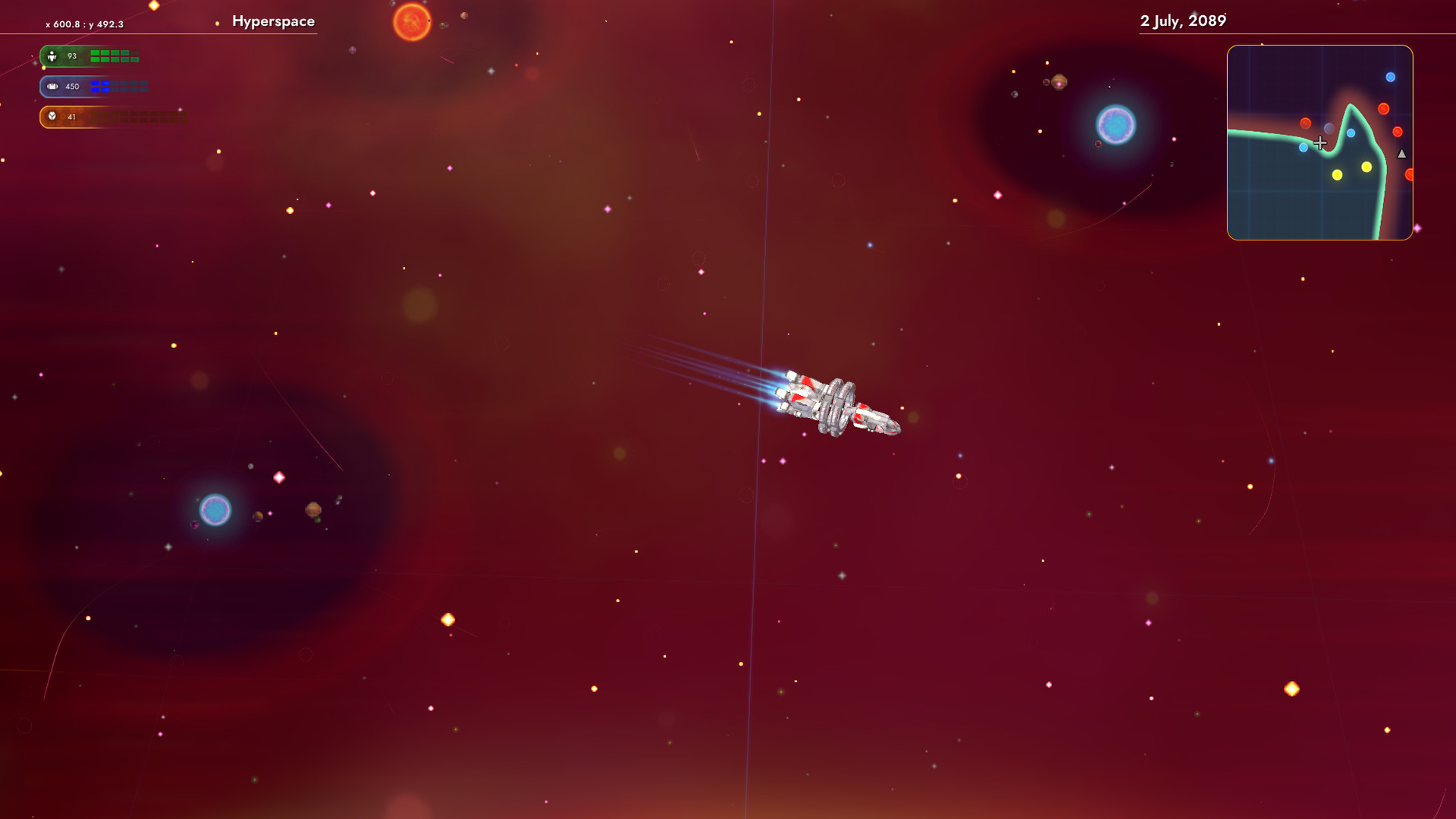
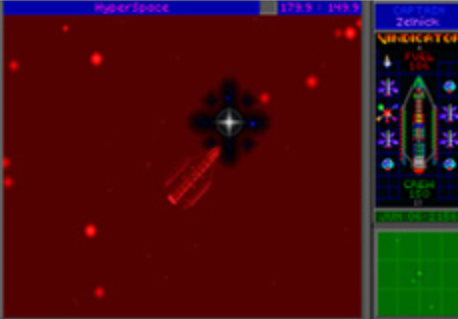
Let's take a look at the two screenshots posted above with their actual resolution:

vs.

Putting aside the numerous functional differences between the two games in their space exploration systems as well as any debate on the legal arguments consider the games you play right now and what would be the effect if the above two, obviously different, games were actually considered similar enough to warrant being removed from sale.

Think of the first person shooters, fighting games, RPG games, MMOs, MOBAs, etc. you have played or are playing right now and consider the consequences if the threshold of similarity between two games was now set to need t o be greater than the above two screenshots.

Then consider that our game was taken down without due process.  Reiche and Ford, despite being Bay Area millionaires, actually set up a GoFundMe to "defend" themselves have since filed lawsuits against GOG and Valve.  

The merits of this case haven't been heard yet. In fact, the case is still in the discovery phase, it'll be months before the merits are heard.  In the meantime, because of the way the DMCA system works, the games are likely to remain off of GOG and Steam for the duration. 

In other words, our competitor, who has no shipping title, used the DMCA to remove a competing title for sale without having to demonstrate any merit to their claim.  In fact, not only have they not been found to have had any merit to their claim, but as the table is shown above, if their position had any merit, it would be a catastrophe for gamers and game developers.  Consider the ramifications of how a AAA publisher might use the DMCA tool to prevent future competitors from entering the market.

How can you help?

First, spread the word.  Make sure people know about what has happened there. Thankfully, Stardock is diversified enough that we've only had to lay off a few people as a result but imagine what would happen to an indie who makes a game that is just as or more similar to what you see above.   #freestarcontrol 

Second, become aware. How many other games could fall under this.  Imagine if Torchlight or Fornite or any number of other games that share superficial similarities had been DMCA'd? 

Third, don't let it be ideological. Regardless of your politics, this is an issue that affects all creators.  Not just game developers.  The issue here is that an entirely new creative work was DMCA'd.  If you make something and put it out there and someone thinks they have rights to it, regardless of how dubious their argument is, there is a mechanism for that: the courts.  

What's next?

You can still get Star Control: Origins from us directly at www.starcontrol.com. We are selling it for 50% off to encourage people to buy direct.  

We are working on v1.4 and we are on schedule for our next DLC release that is part of the Earth Rising Season Pass.   

The Linux version is coming along which helps us with our Vulkan work to bring it to other platforms.

Obviously, not having it available on other digital distribution platforms is hindering our work to bring you new Star Control games.  We are confident of the eventual outcome of the dispute but in the meantime, not having our newest major title widely available for sale is not helpful.

In the meantime, #freestarcontrol www.starcontrol.com.  

Thank you for your support!


At long last, Reiche and Ford state what they think they own.

Published on Thursday, January 3, 2019 By Brad Wardell In Star Control Journals

This past week, Activision executives, Paul Reiche III and Fred Ford sent DMCA notices to Steam and GOG demanding the removal of Star Control: Origins on the grounds that Star Control: Origins violates unspecified copyrights of theirs.

Finally, after many months of requesting from them what, specifically, in our game that they they believe they own they finally posted a table outlining their justification for taking down our game.

For those not familiar with copyright, here is a really simple outline of what copyright covers and doesn't cover.

The table is right from their website.  Our comments are next to it.

Next time you play a game, any game, consider how many ideas in it appeared in other games.  For the record, Star Control: Origins is not a clone of Star Control II.  For obviously reasons, it's a 25 year old game and as we have stated countless times, it wasn't commercially viable to continue that story.  We were interested in licensing the ships from Star Control II to include in Fleet Battles but they declined to so we didn't include them.   But even if it were a "Clone" of the gameplay of Star Control II, that doesn't fall under copyright protection. See here for more information on that.

So at long last, the meat of their complaint.  They think they own the ideas listed.  


UPDATE: No, we did not make up this chart.  You can find their chart here.  These are their claims and words. We have not edited their claims.


As a reminder, this table was made by Reiche and Ford.  Not us.  We aren't putting words in their mouths here.  This is what they actually believe.  This is their justification for filing a DMCA to take down a shipping game.

As for their argument that game ideas count as expressions and can be copyrighted, the copyright office already admonished them for this erroneous misinterpretation.


Paul Reiche and Fred Ford issue DMCA take down

Published on Monday, December 31, 2018 By Brad Wardell In Star Control Journals

We have received news today that Paul Reiche III and Fred Ford, contractors on the classic DOS game, Star Control 2 for Accolade and widely credited as being the "creators" of Star Control II have issued a DMCA take down notices to Valve and GOG to take down Star Control: Origins.

(this is the one sent to GOG)

As some of you may know, there is a legal dispute between Stardock and Reiche and Ford regarding the trademarks and copyrights pertaining to Star Control.  Stardock owns the copyright to Star Control 3 and the trademark to Star Control overall.  Reiche and Ford claim to own the copyright to Star Control 2 (though it's not clear what within it they own outside source code).

You can read the history here:
https://www.stardock.com/games/starcontrol/article/487690/qa-regarding-star-control-and-paul-and-fred

Unfortunately, rather than relying on the legal system to resolve this, they have chosen to bypass it by issuing vague DMCA take-down notices to Steam and GOG (who, btw, Reiche and Ford are suing using GoFundMe money).

Steam and GOG both have a policy of taking down content that receive DMCA notices regardless of the merits of the claims. 

To my knowledge, never in the history of our industry has anyone attempted to use the DMCA system to take down a shipping game before. For example, when PubG sued Fortnite for copyright infringement, they didn't try to take Fortnite down with a DMCA notice.

For those not familiar with copyright law, you CANNOT copyright ideas, individual or short phrases, concepts, mechanics, game designs, etc. 

Star Control: Origins does not contain any copyrighted work of Reiche or Ford. We spent 5 years working on it making it our own game. It very much plays like you would expect a Star Control game. But that has nothing to do with copyright. 

We have assurances from GOG and Valve that already purchased games will continue to work.

Unfortunately, without the income from Star Control: Origins, Stardock will have to lay off some of the men and women who are assigned to the game.

We will do our very best to continue to support the game and hopefully Star Control: Origins will return as soon as possible.

Brad's 10 biggest professional blunders of the last 25 years

Published on Friday, December 28, 2018 By Brad Wardell In Personal Computing

2018 was the 25th anniversary since I founded Stardock.  I was a college student then and I had no idea what I was doing.  As an engineer, my skill set was in problem solving not in business or people or negotiation or accounting or marketing.  Luckily, my problem solving skills allowed us to survive a lot of mistakes and learn from them.  But to learn from a mistake you have to make it.

So here are the ten biggest mistakes I made in my career (so far) in ascending order to my biggest.

#10 Not networking with others

As with many engineers, I was not a people person.  So I never found any value going out to GDC or other industry conferences to give talks.  For many years, I was frequently invited to give a presentation on some new tech we had done by Microsoft or IBM or organizers of various shows and just declined because I just didn't see the value of using time to fly out somewhere to talk.

As I got older, I recognized that this was a big mistake because, being located in Michigan USA, I didn't develop the kinds of industry contacts or partnerships that I should.  I've been friends with Soren Johnson, who designed Civilization IV (and is my partner at Mohawk) and I've seen the dividends he's recouped from investing time into attending conferences.

#9 Creating a Twitter account

This is pretty obvious now.   Until 2012, very few people would have considered me even remotely "controversial".  My politics are extremely bland.  I'm maybe mildly conservative, libertarian?  But I have very little passion either way because while politics interests me from a game mechanics point of view, the issues do not. 

Nevertheless, I would say now I'm considered controversial in some quarters of the game industry because I've tweeted my opinion on various topics over the years.   Opinions I still hold to be true but don't consider particularly controversial.  

Examples:

During #Gamergate I repeatedly opined that yes, the gaming media often covers things based on their personal relationships and politics.  This has nothing to do about "harassment" of anyone or whatever twisted version of #gamergate its opponents have imagined the controversy was about.   

For those of you who aren't familiar with #Gamergate, here it is in a nutshell:  Some game journalists got caught giving preferential coverage based on their relationships and politics.  This was an open secret that I thought everyone knew about anyway.  We'd gotten lots of coverage because I've been friends with people in the press. It's like every other industry. 

The main difference is that the gaming press was much more obvious about their politics than say the tech press.  I don't worry about our software products not getting covered because a journalist doesn't agree with whatever politics they think I have.  The gaming press? Yea, it's a mess.

But now, of course, thanks to social media I'm frequently accused of being a racist, homophobe, transaphobe, and various other things that have no relationship with reality.  We did a charity event with Humble Bundle and actually has so-called "activists" harassing the charity because they were working with us.  That's how insane social media has gotten.

#8 That damn email

Probably the dumbest thing I've ever done is send an angry email to an employee who clearly had an ulterior motive.  This employee and I hadn't gotten along in awhile and in hindsight, I should have let her go long before but she was actually very good at her job, I just felt she had a terrible attitude.

Anyway, after she had criticized a couple of male colleagues for highlighting their hair (in front of other female witnesses) I teased her about bleaching her hair which made her very angry.  

The next week, she sent me an email demanding that I cease making "sexist, vulgar and embarrassing" jokes around the office.   Anyone who knows me would describe my humor as...well, "dad" humor.  It's not crude humor so her characterization irritated the hell out of me.  So I responded with the dumbest response in history, "Well I'm a sexist, vulgar, embarrassing person and if you have a problem with that, find another job."  

People do dumb things when they're sleep deprived and in my case, I had been up for over two days working on Elemental (this was written on an email) and I already tend to be guilty of not having a lot of patience with millennial SJW types under the best of circumstances.  Nevertheless, holy cow was that dumb and once it was leaked to the press, all context was lost. 

#7 Letting Strategy First be our publisher for Galactic Civilizations for Windows

This almost killed us.  So when we came over from the OS/2 market, we had no idea how to the Windows game market worked so we teamed up with Strategy First.  Despite having paid 100% of the cost of developing the game, we never got paid and Strategy First later filed for bankruptcy.

Sadly, this was a trend for Galactic Civilizations.  The original OS/2 version was manhandled by a company called "Advanced Idea Machines".  We never were paid our royalties on that game either and their primary contribution was to create the ugliest retail box in history...

Image result for galactic civilizations OS/2 box

Ugh. That box.


#6 Hiring friends


#5 Not focusing the Stardock Strategic Investment Fund on fewer projects

#4 Not patenting ZIP folders

#3 Not making Elemental 64-bit from the start.

#2 Not porting Galactic Civilizations to Windows NT in 1996.

#1 Staying in the OS/2 market long after it was obvious that the market was going to die.

Game Developer Economics of 2019

Published on Friday, December 28, 2018 By Brad Wardell In Game Development Journals

If you're a game developer, 2019 is the year you adapt or die.

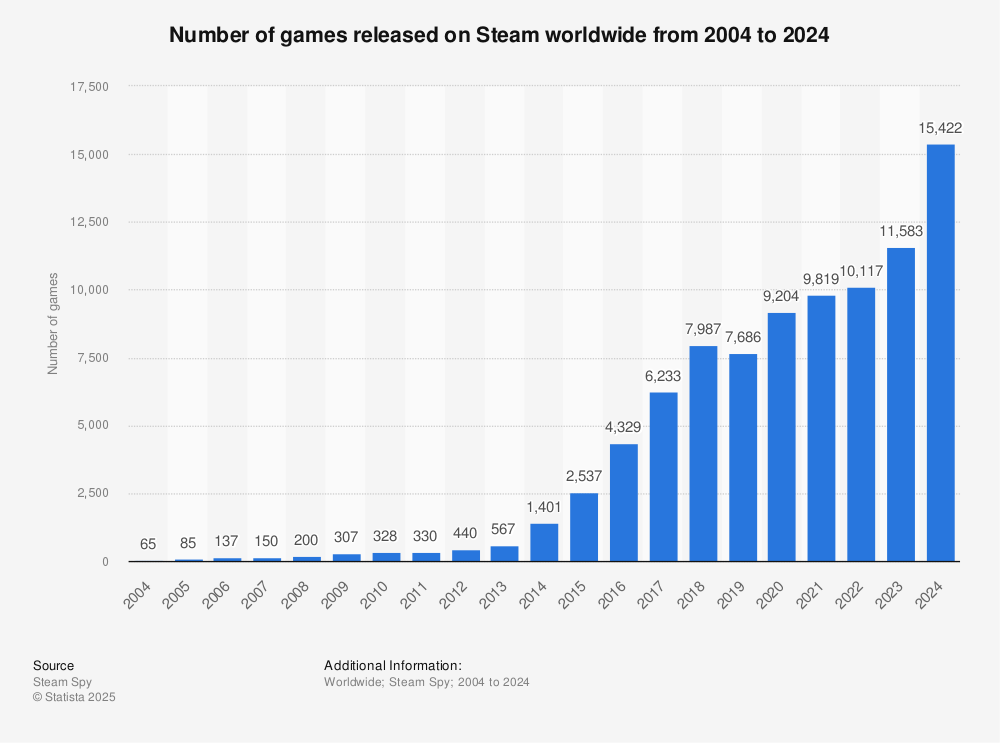
The market has changed. This Steam release chart makes it obvious:

Image result for graph steam game releases by year

2018's numbers aren't available yet but given that the flood gates are now open, you can imagine what that looks like.  Like every other industry that has reduced the barrier to entry, the game industry is filling up with titles.  This is (mostly) good for gamers but presents new challenges for game developers.

The Pareto Principle

There are certain mathematical models that become relevant once you are dealing with numbers this high.  The most obvious being the Pareto principle.

In games, it works basically like this:  The square root of the total competition will earn 80% of the income of a given competitive field.

Let's assume that by end of 2018 there are around 30,000 titles on Steam.  

Roughly speaking, that means that in 2018 the top 180 or so will make 80% of the revenue and the remaining 29,800 will share in the remainder of the 20%.  As others have noted, Steam's revenue has not been increasing at anywhere near that rate.

In 2017, Steam generated around $4.3 billion versus $3.5 billion in 2016.  Or put another way: In 2016 there were 10,000 titles on Steam and in 2017 there were around 18,000 titles on Steam.

This works out to the bottom 9,900 titles on Steam in 2016 sharing $700 million.  Or $70,000 for the average for 2016.

But for 2017, while revenue went up to $4.3 billion, the number of titles went up to around 18,000.  Which, using the Pareto principle means that that while the 17,800 shared 20% of that amount . Or $48,314 for the average of 2017.

For 2018, let's say the revenue increased by the same rate as it did previously.  I don't think this will be the case because of the trend of a few major titles of last year coming out on their own custom platforms.  Indeed, if you look at the Steam top sellers for 2018, only three of them were released in 2018.   

So for the sake of argument, let's say that total revenue increased to $5 billion last year.  That's an impressive increase in total revenue right?

However, while the top 180 or so games will make 80% of that revenue, the bottom 28,800 or so will share in on the remaining $1 billion. Or $34,722 for the average of 2018.

The Pareto principle is a pretty universal axiom used in many industries.  It is, what it is.   It is a trend that has already occurred in the music and video industries.  As the technology and logistics to produce content allow more competition, not only do prices come down but the per product revenue comes down as well regardless of the price.   That means developers can't solve this problem by lowering their price.  The top 100 or so will always generate around half the total revenue with the top 200 generate around 80% and the rest just will get largely lost in the shuffle.

Discoverability is not the main problem

No matter how perfect Amazon, Steam, GOG, Humble or anyone else makes their discoverability algorithm, it won't change the axiom that that the very top games will generate nearly all the revenue.  Discoverability helps to be sure. But it helps at a linear rate of return rather than the exponential rate of the Pareto distribution.

It's easy for a game developer to blame the platform holder.  But it's no more Steam's fault that lots of new titles are being submitted than it is Amazon's fault that lots of new digital books are being released.  It's not like there were 10,000 games being made per year in 2012 that were being censored.  It's just that the rise of inexpensive high end computers for development combined with the amazing tools available to developers has resulted in an explosion of new titles.

So what do you, the developer, do?

There are a number of well tested paths to address this.  One of the reasons capitalism works is that it organically generates lots of competitive segments so that the Pareto principle gets split into lots of mini-competitions.  For example, Paradox has done well with the "grand strategy game" segment.   Being the leader in your niche can translate into a better chance of getting a much, much bigger piece of the pie.

Ultimately, however, it means that we will see a major stratification of game development this year.   If you're a major publisher, there is no point in investing in a title that won't be in that top 100.   

For Stardock, which has historically worked in the mid-market segment, it means reviewing our own strategy.  As a company, we have enough engineers to make a single AAA game but have operated with multiple teams going at once to make mid-market games (Galactic Civilizations, Star Control, Ashes of the Singularity).  But as you can imagine, we have seen each game's revenue affected as you would expect.

What is Stardock doing?

Stardock, being an independent developer, has always been able to work on whatever it wants to since it self-funds.  This, however, is also a doubled edged sword because it also has meant it errs a bit on the side of caution and thus has not tried to be the "leader" of a given niche but rather the leader of a niche within that niche.  I.e. better to spend $3 million to make $15 million in a niche (but also be  able to recover if the game fails) than to risk $9 million.     

The most obvious example of Stardock's traditional strategy is Galactic Civilizations III. For $3 million invested in generated around $15 million in revenue.  But that's nothing compared to Stellaris. Despite being released in 2016 it was the 14th top seller on Steam last year and owns the space strategy genre right now.  

When Galactic Civilizations III was being designed in 2012, there were only 1,500 titles on Steam.  The risk of making our budget back was very low. 

But as we enter 2019, it's a very different world.  Spending $3 million knowing you won't be in the top 200 is now a very risky strategy for an independent developer.  As other developers have noted, your options are to spend trivial amounts to play the slot machine of indie success or go for the top 200 which means a much bigger risk for an independent studio since one failure could bring down the whole company.

So there are a few things we're thinking of:

  1. Helping Indies.  Like I said, discoverability won't cause the third best fantasy strategy game to suddenly become the top seller, but it can make it can double or triple the game's revenue easily over what it might have done.  So this is one area we are looking at is helping promising indies succeed.
  2. Promising Niches.  Stardock is the main user of Oxide's Nitrous engine which allows for emergent game designs.  Since it's core-neutral (i.e. the more CPU cores you throw at it, the more it can do) we can make either new types of games or we can do niche games with a fidelity or gameplay that wasn't previously possible.  The challenge here is that as we saw with Ashes of the Singularity, a game with a $2 million budget (but has sold almost 800,000 copies) is that many people didn't have 4 CPU cores in 2016.  And for Nitrous to really show its advantages, you really need 8 to 16 CPU cores which the market just isn't ready for yet so we still have to design around 4 CPU cores which limits our advantage.
  3. Embrace our existing niches.  With Star Control: Origins, we attempted to go wider.  And while the game has done fairly well on PC, its budget was predicated on porting it to consoles which is underway.   But rather than going wide with future games, another path is target future games at tighter segments.  So for instance, a Star Control II might be a more hard-core RPG.  Sins of a Solar Empire has been so successful because it dared to be a multi-hour long RTS.  An Ashes of the Singularity II might focus on that kind of depth (i.e. multi-hour games) based on a much richer economic and diplomatic system rather than being a kind of simplified Total Annihilation game.

Regardless of what Stardock does, the game industry as a whole will have to adapt to this model and developers who don't will disappear.


Ten Galactic Civilizations III changes coming in early 2019

Published on Friday, December 28, 2018 By Brad Wardell In Galactic Civilizations III

If you guys thought that GalCiv III: Crusade was...ahem...a "game changer" you're going to (we hope) really like what we have planned for the Winter 2019 expansion we're working on.  We'll be announcing it relatively soon so I won't spoil it here.

Here, however, are our general objectives we want to accomplish:

  1. Fewer clicks with the UI to get things done.
  2. Making really big maps more enjoyable to play on.  It's one of our strongest features and they're annoying (IMO).
  3. Bringing back beloved alien species.
  4. Pacing.   There is a lot of...emptiness between turns 25 to 75 which is a turn off for many new players and really needs to be addressed.
  5. Multiplayer.  While few people play it multiplayer,  we think some of our other changes will make the game a lot more skill based.
  6. AI.   If you got 3.2 you probably noticed a substantial AI improvement.  But we have other improvements in the works.  I really want to write up a full on doc on the challenges of AI. Nearly every suggestion we get from players on AI is something the AI already does.  The AI does "all the things" but because it doesn't "cheat" (contrary to what some people say) it does not always have the information that players think it has and makes poor choices.
  7. More strategic choices.  What I mean by this is that there are certain strategies that are just plain "better" for winning.  Rather than nerfing those paths, we are implementing new, equally powerful paths towards success.  This is harder than it may sound because we have to code the AI to effectively use these paths.
  8. Tech tree overhaul.  This will only be in the expansion because if it were put into the base game a lot of people would get upset I suspect.  There are a lot of new techs but most of the "specialist" techs are being removed.  Why? They're just not very interesting.  A 10% bump in something is enough enough to justify the clickity click click of the tech.  Every tech should have meat to it.   
  9. Visual pass.  We have a lot of good graphics in GalCiv III.  And we have some terrible, terrible graphics.  Our procedurally generated planets might have looked good in 2012 when they were being developed but...oye.  They hurt my eyes.
  10. Fleet battle viewer updates.  First, we are hiring game developers.  Send us your resume.  We have a lot of projects at Stardock and a lot of the time, we can't put engineers on something simply because there are no people free.  The fleet battles area of the game is something we really do want to improve but we can't because of lack of developers free to work on it.

Let me know what you think!

Happy New Year!

Fences V4 Wishlist

Published on Tuesday, December 4, 2018 By Brad Wardell In Fences

As we work on the next version of Fences, we are interested in getting your feedback on what you'd like to see.

We are particularly interested in features that will make Fences more useful in your work and enterprise environment.  

Please comment below with any ideas and suggestions you might have.

Thanks!

Game Development jobs at Stardock

Published on Tuesday, November 27, 2018 By Brad Wardell In Stardockians

Are you a software developer interested in working in the game industry? Are you a talented artist with a great eye for making games with a distinctive look and feel? If so, make sure you check out some of the positions available at Stardock. 

Stardock has been around 25 years with the average employee having worked here for over 5 years.  It's an environment that encourages innovation, career growth and is just plain a fun place to work.

Today's highlighted position: Game Developer

Stardock is trying to fill up engineering spots at its Plymouth Michigan studio.  The position would involve working on cutting edge games as well as helping us bring our games to other platforms.  

Primary Responsibilities Include:
  • Write gameplay code and UI code.
  • Scripting and helping create quests and campaigns.
  • Improving engineering skills.
Education and/or Experience Desired:
  • Bachelor's Degree in Computer Science, Engineering, Mathematics or equivalent work experience.
  • A passion for gaming and game design.
  • Self-motivated, likes to identify and solve problems.
  • Strong C++ background.

If you're enthusiastic about the position and would like to tell us about it, please submit your resume and cover letter to [email protected], with "Game Developer" in the subject line.


739 pages 21 22 23 24 25 26 27 28 29 30 Next