Brad Wardell's Blog


Forums vs. Social Media

Published on Wednesday, January 30, 2019 By Brad Wardell In Personal Computing

It’s no secret forums have seen a serious decline in recent years versus social media. Which is a shame because social media is so impersonal.

I think this year I’m going to focus more time hanging out here.

Galactic Civilizations III: Retribution Journal #1

Published on Tuesday, January 29, 2019 By Brad Wardell In GalCiv III Dev Journals

A new beginning

image

The story of Galactic Civilizations is the story of the future.  Our future. 

Galactic Civilizations III is actually our 6th edition that provides you with the framework to tell that story (we made 3 OS/2 versions back in the 1990s).

With each iteration, we get a little bit better at it. Sometimes, like when we change engines, it takes awhile to surpass where we were in previous editions.  For instance, the OS/2 version of Galactic Civilizations was, in most respects, better than Galactic Civilizations II until we made the Dark Avatar expansion for it.

For Galactic Civilizations III, it probably wasn't until we made the Crusade expansion that we finally surpassed GalCiv II.

Galactic Civilizations III: Retribution takes us in a direction that the series has never touched before. It's a new beginning.

The Grognard's Guide to Galactic Civilizations III

From a sheer major feature point of view, Galactic Civilizations III had more than previous versions when it arrived in 2015.  But it was lacking certain features that were a real sore point to players, which we began to address with the expansions. Namely:

image

This is my quickie non-marketing evaluation of each expansion. You can kind of see why Mercenaries was the least beloved. This is, by no means, a comprehensive list of features for each one. Just the ones that I think most players would agree were important.  For instance, Crusade re-did the Invasion system. I don't think that feature is any better or worse than what was there before, so I didn't count it.

Crusade is widely considered to be "the big one," and it's easy to understand why: citizens.

This was a game-changer.  It re-did the game's economy in a way that is both a lot easier to understand, and yet a lot more nuanced. It's one of those rare features that greatly simplifies the presentation of the game without dumbing it down. In fact, it makes the game a lot more sophisticated.

The other two features I mentioned, Espionage and the Civ Builder, are pretty big deals - depending on how you play. The Civ Builder is almost as important to me as the Citizen feature. The espionage part is fine.  But it's not on par with the other features.

So let's take a second shot at this chart, this time assigning a value to each feature:

image

Now, this doesn't mean that I don't think Intrigue wasn't a really good expansion. It just means that Crusade was monstrously good.

So what about Retribution?  As you can see, I don't think any of the new features of Retribution match the importance of the Citizens feature.  Moreover, if you don't really care about the new species (Drath and Korath) or the new campaign, then Retribution only has 15 to Crusade's 16 points. 

Of course, this is just my own rating system, yours might be totally different.

Right from the Start

image

The final version of Retribution should look better.  We're still working on the visuals. But you will notice, right away, some changes.  First, you start with an Artifact.  You always start with one.

image

Your home planets are much different game to game. And if you look closely, you will notice that what's available to construct on turn 1 has changed.

Sometimes, there will be artifacts that can be enhanced so cheaply that you may want to use them immediately rather than building that shipyard. 

The other thing you may notice is that there's a Colonization Center improvement. This is a new, one-time improvement that will increase production, population, and growth.

Population Growth

This will be the most controversial change in Retribution. Default growth has been reduced from 0.1 per turn to 0.01.

image

Population growth can be increased (especially later in the game via the new immigration technologies), but simply colony rushing early on is going to have consequences.

Here's the next thing you're going to notice:

image

The stars are substantially further apart. This makes the star systems feel more vast (before we had them practically on top of each other) and makes Hypergates interesting.  You can still choose to go up the engine tech tree to make your ships faster, but investing in Hypergates provides an interesting alternative.

Same number of techs, more meaning

image

You'll also notice that most of the optimization techs (where you would choose one of three) are gone.  Instead, there are new techs that help flesh out your strategic choices.  For instance, you don't simply get Space Elevators - you research them.  Spatial Manipulation gets you onto the Hypergate tech path. Ignore my spelling mistakes btw, they'll get fixed.

There are many more things you can choose to build than before (potentially), but they are delivered now via the tech tree moreso than before.

image

Space Elevators are important in the true Sci-Fi sense that we just kind of brushed off in previous expansions.  The ability to cheaply get things into space is going to be a pretty big deal.  Besides being able to build space elevators, you'll also be able to build supply ships that can send raw materials to your colonies.  I'll talk about that in a second.

image

Building scouts is a lot more useful now that stars are actually separated by quite a bit of space.

image

Under the covers, we've modified our galaxy generation system so that what's near players when they start is a lot more balanced. So you won't have to deal with games where one player has tons of great planets near them, while you get nothing. Everyone will have a reasonably equally good (or crappy) start.

Building your civilization in Retribution

image

So now I  have a class 12 (Earth is class 10) planet. Wow. That's great! can't wait right?

Except...

image

If you look closely, you will see that its raw production is only 3, so it takes forever for anything to get built. This has been a challenge in all the GalCiv games.  This is why some players find the game a little boring at this stage.  Sure, your capital planet is doing just fine, but your other planets just are a grind to get going.

Before Retribution, you'd just wait for the population to grow, build a bunch of cities and eventually, hours later, it's kicking butt. But from our logs, we know we lose a lot of players during that period because it's just not interesting.

Moreover, if anything, Retribution would aggravate this problem because population growth is 10X slower by default. So you can't just turn-time your way out of this problem. This is where Supply Ships come in. 

Players can build Supply Ships that carry 100 production with them.  When they get to a colony, it's quickly unloaded and used. If there's nothing to build at that moment, it stores that production for later. This is a game-changer because previously, if there was some boon to production, it was wasted after a given planetary improvement was constructed. Now, it gets stored and used later.

Having planets store excess production materials was crucial to add to the game because we didn't want players to have to micro-manage sending out supply ships.

Supplying your civilization

So now you can build up your worlds a lot faster thanks to sending Supply Ships.  However, there's that tricky distance issue. 

Do you design each Supply Ship (which is consumed when it reaches its destination) to have a bunch of engines? That's expensive but it'll get them there.

Or...

Do you build a Hypergate?

image

The Stellar Architect is a new type of ship which allows for the construction of Hypergates.  It takes two hypergates to create a hyperlane between them.  But doing so will double the speed of any ship on that lane.

Hyperlanes

Now you build a Stellar Architect who can construct a Hypergate.  You will need to build a second one to create the other end.

image

image

Once you build that second Hypergate, it will ask where you want to link it.

And now you can fast-track supply ships.

image

image

Using hyperlanes is automatic. You don't have to do anything - just click on a destination and your ship will find the fastest route there, using hyperlanes whenever available.

image

Meanwhile, my planet is still slowly building up, thanks to having some asteroids nearby to help. It's still very slow going, but help is on the way.

image

The Supply ship arrives with goods from Earth.  Each turn, it will use whatever it takes (until it runs out) to finish the current planetary improvement being constructed.

So instead of it taking 12 turn to get through the Factory, Space Elevator, and Shipyard projects, it only takes 3 with the Farm being finished on turn 5 (instead of it adding an additional 14 turns).

Hypergates also make it a lot more viable to send citizens around your territory because they get there twice as fast, which makes traveling far less dangerous.

To conclude: sending a Supply ship built at Earth to Viola drastically reduced construction time.

image

Now this planet is built up enough to be reasonably self-sustaining.

Pacing Pacing Pacing

Hypergates and Supply ships not only expand on your strategic options, but allow you to customize your civilization a lot more specifically while simultaneously reducing the mid-game doldrums of waiting for your planets and ships to be worthwhile.

Let me know your thoughts in the comments! Still lots to talk about.

______________________________

Retribution Journals

Journal #1 (Current)

Journal #2

Journal #3

Journal #4

Journal #5

Journal #6

Journal #7

Journal #8

Journal #9 (Coming Soon)

Star Control: Origins returns to GOG and Steam

Published on Monday, January 28, 2019 By Brad Wardell In Press Room

Stardock is pleased to announce that Star Control: Origins has been restored to both Steam and GOG after having been subjected to DMCA abuse by Paul Reiche III and Fred Ford, who claimed to own a series of ideas found in Star Control: Origins. They claim that the game violates copyrights from Star Control II, a game they are credited with having designed over 25 years ago.

They justified their DMCA by posting the chart below.

To clarify: THIS IS THEIR CHART.

This chart lists a series of ideas that they appear to believe, when put together, violates their rights. After discussions with Valve and GOG, who are now aware of the nature of their claims, we are happy to report that Star Control: Origins is fully restored.

We believe that gamers, developers and all those who believe in free artistic expression can see the potential harm self-evident in the claims Reiche and Ford are attempting to make here. The ultimate ends of such claims could potentially be disastrous for anyone wishing to make such games and not something we accept as a matter of course.

Copyrights protect the specific expression of authorship.  See the U.S. Copyright Office FAQ for more information. In fact, the only thing in their chart that can be copyrighted is the music, which Reiche and Ford have no rights to. The composer retained rights to the songs, and worked with us on the music for Star Control: Origins. One can only speculate what would happen if someone were to claim ownership of entire genres or game designs.  Next time you play a game, whether on your PC, console, or mobile, think about how other games in the same genre play or how it may share features in common with other games that have previously been released.

There are other types of IP (intellectual property) such as trademarks (which protect words and short-phrases), and patents (which protect inventions).

With regards to the Star Control franchise, Stardock acquired it from Atari (who, in turn, had acquired Accolade) in 2013.  This included all trademark rights to the series (i.e. any word or short-phrase from the franchise that is strongly associated with Star Control), as well as the registered copyrights to Star Control 3.  Reiche and Ford have no rights to our work. Any association between Star Control: Origins and the classic series is part of the trademark (trademarks protect against consumer confusion), which is exclusively owned by Stardock and not, obviously, relevant to any copyright claims.  

Thanks to the timely review of the situation by our partners at GOG and Valve, and taking the exceptional step in placing our game back for sale, despite ongoing litigation, we have been able to avoid having to lay off employees assigned to the project.  

We are hopeful that this malicious use of the DMCA process will make consumers aware of just how out-of-hand the state of the DMCA has become. Anyone with an interest in digital goods and services owes it to themselves to increase their awareness of how wide-spread DMCA abuse has gotten and spread the word on it.

Most targets of DMCA abuse do not have the fortune of having the instigators post a chart demonstrating how misinformed they are on the nature of copyrights and thus, we believe, helping persuade most people familiar with IP law to realize the ridiculousness of the claims being made.

Star Control: Origins is a space action RPG. Your mission is to explore the galaxy, meet new alien civilizations, acquire new resources and technology, and protect Earth from threats lurking in the vastness of space. It was released this past fall to favorable reviews for the PC, with console editions in development.

Thank you for your support and we look forward to creating new Star Control games for years to come.

You can learn more about Star Control at www.starcontrol.com


References:

A letter from an employee at the USPTO correcting Ford and Reiche's lawyer's misconceptions about copyright:


Previous copyright infringement case heard by the Northern District (same court that this case is in):

Verdict: Not infringing:

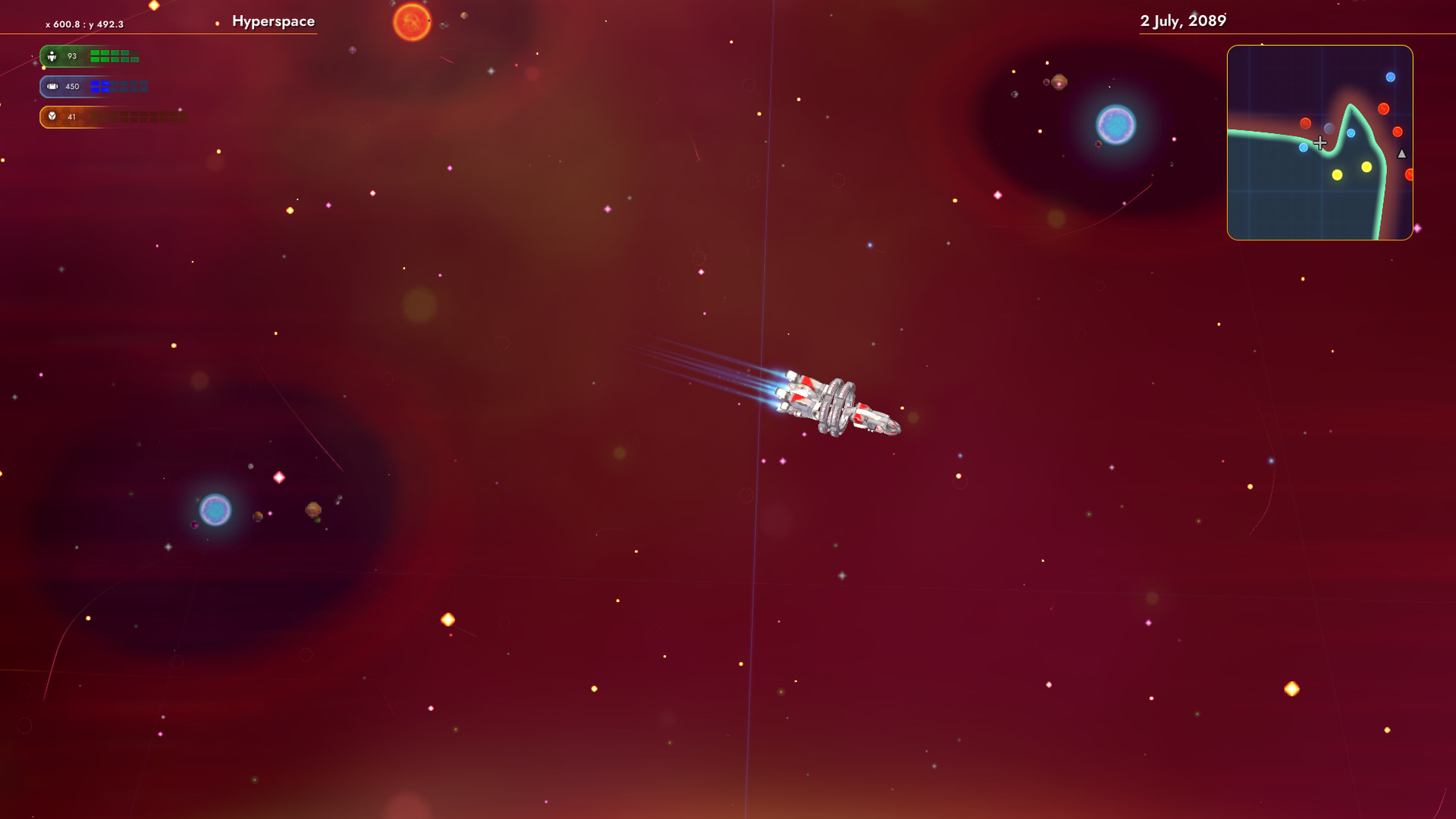
Star Control: Origins - Hyperspace (2018)

Image result for star control hyperspace

vs.

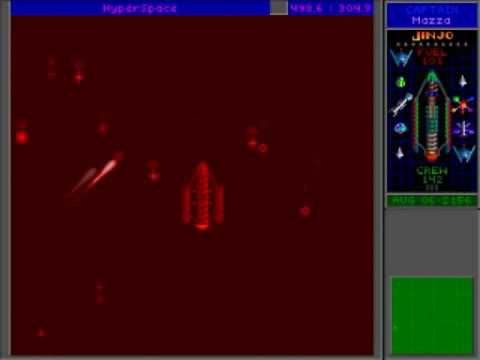
Star Control II: The Ur-Quan Masters - Hyperspace (1992)

Image result for star control hyperspace

Further Reading: History of this dispute.

Retribution for Humanity

Published on Wednesday, January 23, 2019 By Brad Wardell In GalCiv III Dev Journals

Greetings!

Sorry I have been so quiet lately on GalCiv stuff.  We've had our noses to the grindstone on the new expansion pack, GalCiv III: Retribution and we haven't had much time to come up for air.

I'll be sharing lots of stuff shortly now that things are starting to reach screen-shot worthiness.  For today, though, I want to just talk a bit about the background story that I built, over decades for Galactic Civilizations and why Retribution is so important from that perspective.  Now, whether we can pull off a good story in a 4X strategy game is a different topic that will be consuming many evenings shortly.

Story vs. Game

Galactic Civilizations is a space 4X strategy game first and foremost.  It's a sandbox game.  The background lore for the game is really only there to help inspire us when making the sandbox game.   

If I had to do it over again, I probably would have vetoed any sort of campaign.  In fact, if there's a GalCiv IV, there will almost certainly not be a campaign.  I'd rather integrate the lore into the gameplay in pieces that would make each game feel epic and unique.

But make no mistake: Galactic Civilizations is about your civilization and playing in a space sandbox.

With that out of the way, let's discuss the background lore that may or may not be of interest to you.

The role of humanity

I literally wrote the first Galactic Civilizations game starting back in 1992 when I was in college.  I literally just wanted a Civilization game in space.    The problem with making a Sci-Fi style civilization game is you really do want a story foundation for it to rest on.  Civilization had all of human history.  A 4X space game is all speculative.  

So in Galactic Civilizations, the lore begins in the year 2178.  Humans have discovered a FTL engine technology that has gotten out to everyone and there's now a space race to claim all the good planets in reach by hyperdrive.  We are introduced to a number of alien civilizations with their own histories and culture.

The character of humanity

The consistent part of the human's story is that we're really, really trying to be nice.  A lot of our early issues in galactic politics is due to our naivete.  We think anyone advanced enough for space travel has to be benevolent.  We humans aren't benevolent but we really try to be.  We really do.  But deep down, we're savages.

Going all the way back to the beginning and all the way up to Crusade (released in 2017) the human story has focused on us being good guys.

But Retribution's story takes place after the liberation of worlds that had been savaged by the Drengin and now the Terran Alliance is a military super power. It is also pissed off.

The human race tried to be nice and where did that get us? Now we have the upper hand and what should we do? What do you think we would do?  And that is the background story for Retribution and the inspiration of the new features in the game.


Star Control: Winter 2019 Update

Published on Wednesday, January 23, 2019 By Brad Wardell In Star Control Journals

Greetings!

Star Control has definitely been the most...dramatic franchise we've ever worked on.  No doubt the diabolical work of the Crimson Corporation indeed!

So what's next? What's happening?  

Right now, we're working on Part 2 of Earth Rising which revolves around the Lexites.  You might ask, what is the process for creating these?  Well, broadly speaking it goes like this:

  1. General story.  What is the overall meaning for the story.
  2. Design up the quests for players to go on.
  3. Write up the quests.
  4. Playtest the quests.
  5. Decide what writing is going to be voiced by voice actors.
  6. Send to translation

1,2,3 are reasonably fast to get to the first stage.  The longest part is the play testing.  Are these quests fun?  The first part of Earth Rising, Aftermath, actually took a month longer than anticipated because of iteration on the quests. 

Quests are...tough.  I should say, quests are super easy to do but hard to make worthwhile.  I mean, how hard is it to whip up a fetch quest?  Go bring us back 25 Krizak tails and we'll give you a new weapon.  Fetch quests are pretty standard but that isn't why people play Star Control.    Star Control is about telling a story and in the case of Star Control: Origins, the story is about Earth's entry on the intergalactic scene in the late 21st century, far earlier than anyone would have expected.

We are hoping that the Lexite story will be ready to send to voice acting by the end of the month (and simultaneously sent to translation) so that we can get this out to you guys next month (depending on QA resources which will be pushed to their limit with OTC expansions, GalCiv expansions and multiple new titles in development).

Beyond Earth Rising

Then there's the question of what happens after Earth Rising.  

The engineering team is focused on porting our underlying engine so that we can have console and even mobile releases of Star Control games in the future (including Origins).  We anticipate that work to be largely done by the time we're done working on Earth Rising.  So then what?

That really depends on a lot of factors.  One path is to go and do a sequel.  Another path is to do a second expansion for Star Control: Origins.  Which path we ultimately take depends a lot on you guys and what you want and where you want us to take Star Control next.

Let us know in the comments!


Ashes of the Singularity: Road Map 2019

Published on Wednesday, January 23, 2019 By Brad Wardell In Escalation Dev Journals

Greetings!

Lots of exciting things happening with Ashes of the Singularity.  With Star Control: Origins released, we've been able to give Ashes some new attention and I wanted to use this post to update you on where we are.

Engine porting

Under the game is the game engine which in Ashes 1.0 was pure Nitrous.  These days, we have taken the Nitrous engine and integrated all the cool stuff we've developed over the years (Game engine wise) to create a game-specific engine we call Cider.  So right now, we're porting Cider to Linux with Ashes being our first test.  

The good news is that we have Ashes kind of sort of working natively on Linux.  The bad news is that the performance isn't quite there yet.  Vulkan is the graphics platform we're targeting and it's still very young.

New entries in the universe

We are working on a new game in the Ashes of the Singularity universe that we will be announcing next month.  Ashes founders will get it either for free or at a steep discount depending on what type of Founder they are.  

Ashes sequels

So the short version is that we aren't going to be making new expansions for Ashes of the Singularity I.  There might be more DLC but the changes we want to make are a little too radical to have as an expansion.   My next post will be talking about what we have in mind for the sequel so you guys can opine on it.  But if you liked SupCom or TA then you will really like where we want to take the sequel.

Stay tuned!


Stardock Magazine: January 2019

Published on Wednesday, January 16, 2019 By Brad Wardell In Stardockians

## Contents ##

  • Star Control: Origins
  • DeskScapes 10 Preview
  • Galactic Civilizations III: Retribution is coming
  • Sins of a Solar Empire: Minor Factions arrives

Happy New Year! We've had a busy start to 2019 here at Stardock and we can't wait to share all of the exciting things that we have happening with you.

We have a whole bunch of new software and games coming up, plus we're working on some really cutting-edge new technology that we hope to be able to publicly talk about in the relative near future.

## Star Control: Origins ##

Last year, we released one of our most highly anticipated games ever: Star Control: Origins. Players have been loving the immersive (and hilarious) story, the exciting ship-to-ship combat, and the unique cast of aliens and characters they’ve been able to meet throughout the course of the game.

In December, we released Aftermath, Part 1 of the Earth Rising season pass for Star Control: Origins. This 4-part pass covers humanity’s quest to establish themselves on the galactic scene among their new found alien allies - and enemies.

In Aftermath, Star Control has ordered the construction of a new Star Control base in Epsilon Trireme. Not every alien is happy about the prospect of an expanding human empire, however, and already the efforts there have run into trouble.

Meanwhile, a group of suspiciously helpful aliens have informed you of a potential new ally: the Gloosh, who are, quite possibly, the laziest aliens in the universe. On top of it all, a new enemy appears in the shadows, one who seems to have their own long history with humanity…

The Star Control: Origins universe is vast - so vast, in fact, that you can spend hours exploring outside of the main story. Each part of the season pass enhances the main game even further and branches off from the many different subplots that you’ll encounter as you play. We brought back the extremely talented Chris Bucholz (who wrote the entire main story plot) to work on Earth Rising. We can’t wait for players to experience what he has in store for them with these adventures.

Following Aftermath, three more parts will release for the season pass. Purchasing Earth Rising will give players access to all of them, but they won’t all be available right away. The release schedule is as follows below:

Part 1: Aftermath (Now Available)
Part 2: The Lexites (NEXT! Winter 2019)
Part 3: The Syndicate (Spring 2019)
Part 4: Earth Rises (Summer 2019)

Check out the Earth Rising trailer here. If you don’t already have Star Control: Origins, you can pick it up on Steam. For more information, visit www.starcontrol.com.

## DeskScapes 10 ##

Object Desktop is due for some major updates this year.  The first program to get a major update will be DeskScapes.

One of the big changes will be the cloud integration to make it easier to find not just animated wallpapers, but wallpapers of all kinds, and use them easily on your desktop. We have a bunch of new features as well that we'll be showing off as we get closer to release.

If you don't already have Object Desktop, we currently have it on sale for $29.99, which gets you not just DeskScapes (and the beta for v10), but Fences, Groupy, Multiplicity, Start10, and lots of other programs to improve your Windows user experience. 

Visit www.objectdesktop.com to get it.

## Galactic Civilizations III: Retribution announced ##

A major new expansion pack for Galactic Civilizations III has been announced.  I don't want to bore you with the marketing speak, so let me get right to the good stuff.

Many of you here who play games have Galactic Civilizations already (at least some version of it).  The new expansion pack, Galactic Civilizations III:  Retribution is essentially designed around making the game a lot more interesting during your play-through.

Here's the problem with 4X strategy games: There are times they're really fun (like at the start) but there are periods where they can get bogged down.  That's why 4X games tend to be a bit niche. With Retribution, what we did was spend a lot of time playing through and figuring out what points in the game felt like they needed something.

So, here is what we came up with:

First, early game there aren't enough strategic paths.  That is, most people just colony rush.  

Second, mid game you would have many new colonies that were just building up but they weren't that worthwhile.  Thus, you would end up with a lot of "next turn".

Lastly, the late game grind.  This is a big problem in 4X games in particular.  Just getting units around quickly on large maps was a chore.

So, how are we addressing these challenges in Retribution?

Artifacts. As the game begins, scientists have begun finding Precursor artifacts scattered around planets. Even Earth has one. So do other planets. These artifacts, when controlled and activated, give your civilization specific powers. Some big, some small. One artifact, when activated, might randomly teleport a ship across the galaxy. Another one might simply uncover a selected area of the map. And still another might finish a technology.

These artifacts allow you to control the pacing. It costs a lot of resources to activate an artifact to give it a "charge." Do you use that artifact immediately, or do you hold onto it for later? For instance, do you want to get an early tech to give you an immediate advantage, or do you hold onto it until later where some key tech might take 20 turns?  

Cargo Ships. The second problem we've run into and tried to solve (and failed) in the past, is getting colonies built up reasonably fast. The way we've done this before was to have your population increase really quickly.  As in, literally, like 100 million people per turn on a new planet. Let's...try not to think too much about that. But the alternative was to make colonies useless compared to your home planet.  

In Retribution, we've introduced Cargo ships. It is, in hindsight, an obvious idea. Simply build cargo ships filled with processed goods, send them to your colonies, and give them the production directly. Now, population can increase a lot more slowly which means that playing "tall" (small but powerful empires) becomes a lot more viable.

Hypergates. Nearly all space strategy games, including Sins of a Solar Empire, have phase lanes and such between destinations. Galactic Civilizations is one of the few that actually lets you travel in true space anywhere you want. Now this is good and all, but in the late game it can be tedious to travel across large maps.

At various times, we had technologies that made all your ships fast or, alternatively, you could design your ships to be really fast. On paper, this should be fine, but in reality it's tedious at best and frustrating at worst.  The solution: Hypergates.

This requires a picture:

When you build a hypergate, you can connect it to any other hypergate and it will create a hyperlane between them.  Yes, we use the word "hyper" a lot but it could be worse: we could use "quantum" everywhere, as that is the new hip word these days.  Wait. Quantumgates! Nevermind.  

Anyway, your ships don't need to travel to a hypergate to use them. They will simply go to the nearest hyperlane and travel that way if it's faster to take it (you don't have to do anything, the path finding will automatically use them if it's the faster way to get to your destination).

Hypergates are very expensive to construct so the galaxy won't be too filled with them. But, there should be enough of them that late game travel (or even early game expansion and war) should be a lot more interesting.

Now, on top of all that, we are adding new alien civilizations, including bringing back the Drath and the Korath, re-designing the technology tree, and bringing in the exciting conclusion campaign to the GalCiv III story.  Short version: future humans may seem like nice diplomats, but it was a really, really bad idea for aliens to think we were soft and unfamiliar with war.  As it turns out, humans are really good at warfare when they're pushed to it.

## Sins of a Solar Empire: Rebellion - Minor Factions ##

Our friends at Ironclad have finished a DLC for Sins of a Solar Empire.  Minor Factions delivers 15 new mini civilizations to deal with.  Each one has its own backstory and provides unique benefits by having them in your camp.

We realize that many of you would like to see a full-on sequel to Sins of a Solar Empire, but we think you'll still find this to be pretty compelling.

If you already have Sins of a Solar Empire: Rebellion, you can get Minor Factions here.  It has a 95% positive review score on Steam!


Star Control: DMCA abuse

Published on Sunday, January 13, 2019 By Brad Wardell In Star Control Journals

Last week, Activision executives, Paul Reiche III and Fred Ford issued what we believe to be false DMCA notices to GOG and Valve claiming to own elements of the new Star Control: Origins game.

Reiche and Ford, who are best known for running the studio that works on Skylanders and Spyro the Dragon Reignited, had DMCA'd the beta of Star Control: Origins last Summer despite providing us with no specifics as to what, if anything, they believe they own in our game.  

Shortly before launch, Stardock sought a restraining order to prevent the two from making DMCA claims against Star Control: Origins to prevent its September release.  

As you can imagine, after developing the game for five years and only learning at the 11th hour that Reiche and Ford believed that they own ideas that are common in many games, including ones that obviously preceded Star Control II, the game that they designed over twenty-five years ago, delaying the release of our game was not a viable option.  We pointed out that such a delay in our release would result in significant harm.  

The court ultimately ruled in December that the court does not have the right to prevent Reiche and Ford from sending out DMCA notices.  On New Year's Eve, Reiche and Ford wasted no time sending DMCA notices to GOG and Valve who, per policy, removed the titles for sale.

Reiche and Ford did finally post a table listing a series of ideas they apparently believe they own (or at best, own if you use all of them).

This is a copy of their chart.  I want to emphasize that this is their chart and their apparent argument is that if a game has all these things in common that they feel justified in doing whatever is in their power to pull it from sale.

Again: This is their chart.  This is the chart they voluntarily posted to justify getting Star Control: Origins removed from sale.

The DMCA was designed to simplify the process of taking down copyrighted material (movies, music, etc.).   If you're a gamer or a game developer, Reiche and Ford's use of the DMCA like this should concern you.

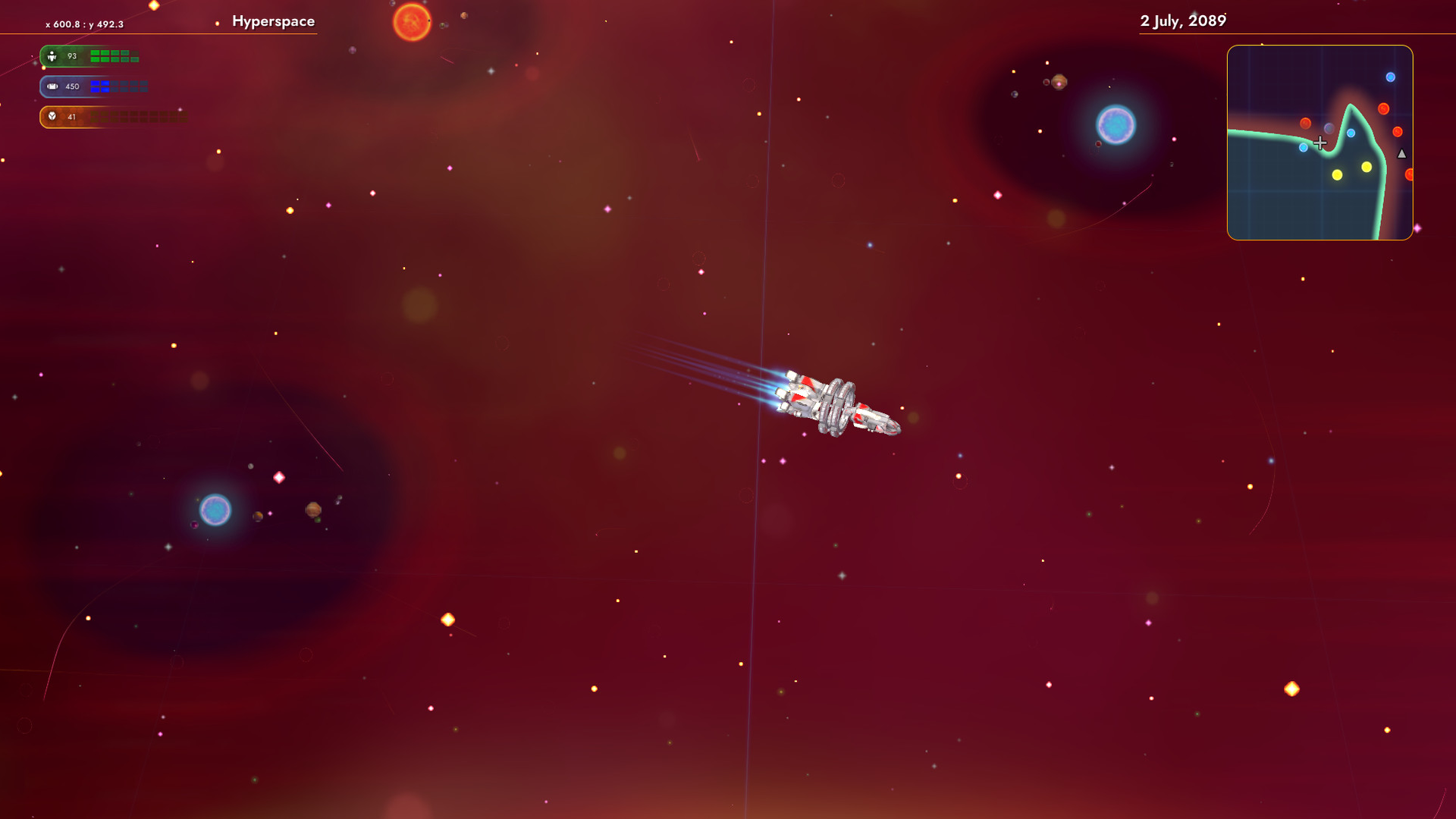
Let's take a look at the two screenshots posted above with their actual resolution:

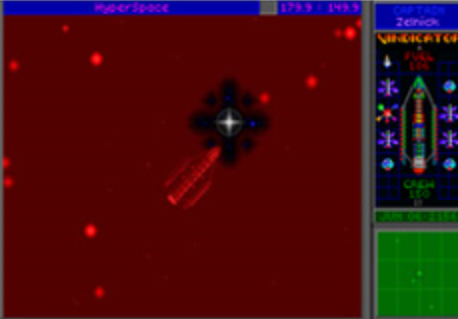
vs.

Putting aside the numerous functional differences between the two games in their space exploration systems as well as any debate on the legal arguments consider the games you play right now and what would be the effect if the above two, obviously different, games were actually considered similar enough to warrant being removed from sale.

Think of the first person shooters, fighting games, RPG games, MMOs, MOBAs, etc. you have played or are playing right now and consider the consequences if the threshold of similarity between two games was now set to need t o be greater than the above two screenshots.

Then consider that our game was taken down without due process.  Reiche and Ford, despite being Bay Area millionaires, actually set up a GoFundMe to "defend" themselves have since filed lawsuits against GOG and Valve.  

The merits of this case haven't been heard yet. In fact, the case is still in the discovery phase, it'll be months before the merits are heard.  In the meantime, because of the way the DMCA system works, the games are likely to remain off of GOG and Steam for the duration. 

In other words, our competitor, who has no shipping title, used the DMCA to remove a competing title for sale without having to demonstrate any merit to their claim.  In fact, not only have they not been found to have had any merit to their claim, but as the table is shown above, if their position had any merit, it would be a catastrophe for gamers and game developers.  Consider the ramifications of how a AAA publisher might use the DMCA tool to prevent future competitors from entering the market.

How can you help?

First, spread the word.  Make sure people know about what has happened there. Thankfully, Stardock is diversified enough that we've only had to lay off a few people as a result but imagine what would happen to an indie who makes a game that is just as or more similar to what you see above.   #freestarcontrol 

Second, become aware. How many other games could fall under this.  Imagine if Torchlight or Fornite or any number of other games that share superficial similarities had been DMCA'd? 

Third, don't let it be ideological. Regardless of your politics, this is an issue that affects all creators.  Not just game developers.  The issue here is that an entirely new creative work was DMCA'd.  If you make something and put it out there and someone thinks they have rights to it, regardless of how dubious their argument is, there is a mechanism for that: the courts.  

What's next?

You can still get Star Control: Origins from us directly at www.starcontrol.com. We are selling it for 50% off to encourage people to buy direct.  

We are working on v1.4 and we are on schedule for our next DLC release that is part of the Earth Rising Season Pass.   

The Linux version is coming along which helps us with our Vulkan work to bring it to other platforms.

Obviously, not having it available on other digital distribution platforms is hindering our work to bring you new Star Control games.  We are confident of the eventual outcome of the dispute but in the meantime, not having our newest major title widely available for sale is not helpful.

In the meantime, #freestarcontrol www.starcontrol.com.  

Thank you for your support!


At long last, Reiche and Ford state what they think they own.

Published on Thursday, January 3, 2019 By Brad Wardell In Star Control Journals

This past week, Activision executives, Paul Reiche III and Fred Ford sent DMCA notices to Steam and GOG demanding the removal of Star Control: Origins on the grounds that Star Control: Origins violates unspecified copyrights of theirs.

Finally, after many months of requesting from them what, specifically, in our game that they they believe they own they finally posted a table outlining their justification for taking down our game.

For those not familiar with copyright, here is a really simple outline of what copyright covers and doesn't cover.

The table is right from their website.  Our comments are next to it.

Next time you play a game, any game, consider how many ideas in it appeared in other games.  For the record, Star Control: Origins is not a clone of Star Control II.  For obviously reasons, it's a 25 year old game and as we have stated countless times, it wasn't commercially viable to continue that story.  We were interested in licensing the ships from Star Control II to include in Fleet Battles but they declined to so we didn't include them.   But even if it were a "Clone" of the gameplay of Star Control II, that doesn't fall under copyright protection. See here for more information on that.

So at long last, the meat of their complaint.  They think they own the ideas listed.  


UPDATE: No, we did not make up this chart.  You can find their chart here.  These are their claims and words. We have not edited their claims.


As a reminder, this table was made by Reiche and Ford.  Not us.  We aren't putting words in their mouths here.  This is what they actually believe.  This is their justification for filing a DMCA to take down a shipping game.

As for their argument that game ideas count as expressions and can be copyrighted, the copyright office already admonished them for this erroneous misinterpretation.


Paul Reiche and Fred Ford issue DMCA take down

Published on Monday, December 31, 2018 By Brad Wardell In Star Control Journals

We have received news today that Paul Reiche III and Fred Ford, contractors on the classic DOS game, Star Control 2 for Accolade and widely credited as being the "creators" of Star Control II have issued a DMCA take down notices to Valve and GOG to take down Star Control: Origins.

(this is the one sent to GOG)

As some of you may know, there is a legal dispute between Stardock and Reiche and Ford regarding the trademarks and copyrights pertaining to Star Control.  Stardock owns the copyright to Star Control 3 and the trademark to Star Control overall.  Reiche and Ford claim to own the copyright to Star Control 2 (though it's not clear what within it they own outside source code).

You can read the history here:
https://www.stardock.com/games/starcontrol/article/487690/qa-regarding-star-control-and-paul-and-fred

Unfortunately, rather than relying on the legal system to resolve this, they have chosen to bypass it by issuing vague DMCA take-down notices to Steam and GOG (who, btw, Reiche and Ford are suing using GoFundMe money).

Steam and GOG both have a policy of taking down content that receive DMCA notices regardless of the merits of the claims. 

To my knowledge, never in the history of our industry has anyone attempted to use the DMCA system to take down a shipping game before. For example, when PubG sued Fortnite for copyright infringement, they didn't try to take Fortnite down with a DMCA notice.

For those not familiar with copyright law, you CANNOT copyright ideas, individual or short phrases, concepts, mechanics, game designs, etc. 

Star Control: Origins does not contain any copyrighted work of Reiche or Ford. We spent 5 years working on it making it our own game. It very much plays like you would expect a Star Control game. But that has nothing to do with copyright. 

We have assurances from GOG and Valve that already purchased games will continue to work.

Unfortunately, without the income from Star Control: Origins, Stardock will have to lay off some of the men and women who are assigned to the game.

We will do our very best to continue to support the game and hopefully Star Control: Origins will return as soon as possible.

739 pages 21 22 23 24 25 26 27 28 29 30 Next