Mmm. That better?
Published on Wednesday, March 15, 2006 By Brad Wardell In WinCustomize News
How's the site feeling tonight? Faster?
If it seems like things have slown down in the past few months, it's because it has. But not in terms of development What's been slowed down is our ability to actually release/deliver things.
We've got updates to WindowBlinds, WindowFX, IconPackager, WinCustomize Browser, DesktopX, SoundPackager, LogonStudio, SkinStudio, a couple new premium suites, new fish, new gadgets, ThinkDesk components, ObjectBar, Control Center, Multiplicity, KeepSafe, and a bunch of other stuff.
So what's the deal? That stupid game, Galactic Civilizations II, has eaten up so much of Stardock's internal support/marketing/IT resources that, well you get the picture. The good news is that the game's doing very well and we're on a hiring spree so that this kind of thing won't happen in the future.
The other good news is that in the coming weeks, you're going to have a downpour of new goodies to play with! Stay tuned. In the meantime, check out the galleries, some great new stuff from Essorant, ChaNinja and others!
Our goal is to fully build up WinCustomize.com into its own independent "business unit" by the time Windows Vista ships and to have marketing/support/IT resources that are more than capable of dealing with both a popular game and all the other cool stuff. We're hiring in all areas right now. Tech support, marketing, sales, developers, artists, you name it. If you are interested in working in sunny Plymouth Michigan, drop your resume to [email protected].
So I want to issue a hearfelt apology that things have been kind of slow in delivering this stuff. We're working on it. 
Our achilles heel. Stardock's server farm has a lot of redundancy. But it has a bottle neck that until the last few months wasn't really a bottleneck.
It's a server called Marvin. Marvin is our Stardock.net account server. It traditionally hasn't been that busy, but as more and more sites start using it, it's gotten bad. Very bad.
The long term solution is to cluster it and use replication to mirror accounts onto other machines to load balance. But that's going to take time.
The short term solution is to get a mongo server in there to do the work. And that mongo server has arrived. It's got 6 hard drives in it to do both RAID 0 and RAID 1. It's got SMP Duo Core 64-bit processors. It's got (I think) 10 Gigabytes of RAM in it.
Once we have that up, the sites will be faster and definitely more reliable. Then we can work on the long term solution which is via replication and mirroring.
Update: The relief has arrived! No more unscheduled down time anticipated.
A friend of mine at a big game studio once told me to be wary of giving users the impression that your design is open to heavy modification by user feedback.
Because in the end, you'll never satisfy everyone and it'll put people in the mode of thinking about game flaws that they might not have given much thought of otherwise -- and then suddenly those flaws bug them.
It akin to peer reviews in offices. For awhile, it was popular to have peers review each other. But then it was discovered that this was not such a good idea because it required people to start thinking critically of people in ways they may never had to otherwise. And then, when they were done, they were much more aware of the flaws of their coworker. Today, peer reviews are much more rare.
So I talked previously about putting in player suggestions. And what it boils down to is that each of us has our own idea on how games should be done.
For instance, I traditionally come from the camp who play games intuitively. I don't like having every number spelled out. I was, for instance, against letting users see the tech tree. Not even in a manual.
But as a game deveoper -- someone making games for other people -- I have to take other people's requests and wants seriously. And so over time I've slowly changed to having mechanics more ane more transparent. Tech tree posters, tech tree in the game, morale info displayed, and so forth.
That doesn't mean that I think I was wrong though. I know I'm not alone. I may be in the minority to be sure but I'm not alone. What gets me is when people try to argue that their preference is the "correct" preference.
As someone form the intuitive camp, I want my game mechanics to work intuitively and feel like they make sense. But as I get older, I'm becoming more engrossed in the board game style of game design where every number has backing and is easily understood.
Galactic Civilizations II is kind of a half-way point between the two. It still has underlying complexity in things like how tax revenue is calculated and how civilization bonuses are applied but it's much more straight forward than the original was. And during the course of doing updates, I'll try to implement changes that bug others and admittedly bug me.
But I don't agree that game mechanics should be necessarily transparent. But I do understand that many people want all the numbers laid out before them and can respect that. All I can do as a game developer is try to make all camps as satisifed as we can.
To summarize what I've read:
There's 4 camps:
1) The board gamers (grognards). They want every number, every detail spelled out. There should be a way to click on anything and find out precisely how it came from. The cleaner and simpler the mechanics, the better.
Ex: 1 unit of populatoin should produce 1 unit of wealth. If I mouse over my income, it would display this information.
2) The intuists. These are the people who want the game to be more like a simulator. The more complex, the more realistic. They don't want the numbers spelled out because they want to use their intuition to lead the way. They considering learning how the relations work as part of the fun.
Ex: 10 billion people are made up of many different socio-economic classes of people, as the population increases, the wealth collected should increase at a sub-exponential rate.
3) The Realists. These are the people who simply want a tweak here or there or a tooltip here or there or maybe just a clarification.
4) The armchair game developers. These are the people who really could make a much better game if only they had the money and developers to convey their genius onto the screen. To prove their genius, they'll use terms like "broken" or "unusable" to describe anything that they consider non-idea.
Group #4 won't ever be satisfied. It's not like there's a scenario where we'd put out some update that totally guts the economic system.
Group #3 will likely be largely satisfied by v1.1 since social production won't be "Wasted" and we'll likely put in additional tooltips.
Group #2 is going to be unhappy that social production is going to transferred to military production which is totally unrealistic. Shouldn't the economy have waste? After all, in the real world it's a fact of life. A business, like Stardock, has to plan its resources accordingly. If we bring in too many employees, then we don't have enough for them to do and waste money on salaries. If we don't bring in enough, we don't spend enough and the government gets that money in taxes.
But things like social spending drives some people nuts and so it's a matter of guessing whether changing a feature akes more people happy than unhappy.
Group #1 would consider the change to remove social waste as "obvious" because such micro management wouldn't be in a board game.
That group also was probably driven nuts by Warcraft 3 which had all kinds of fuzzy math in how battles were handled.
This group could can probably be generally satisfied with simply more tooltips or some sort of analysis on how money is done.
For instance, tax income is non-linear. It's your population taken to something like the .80 power. There's a lot of exponential relations in the game. What other games will often do is cap it or take out any mechanics that get near a race condition.
v1.1 will probably be the point where we start to reach diminishing returns.
I hate doing demos. There, I've said it.
The reason I hate it is that you usually have to pick between a demo that people like and a demo that actually sells the game. It's tough to find that balance.
The best game demo we ever did was The Corporate Machine. In that demo, it was fully playable but you had to play on-line against other people. It was great because people got to see what the game was like and played people on-line. Of course, it required them to find people on-line which was a little inconvenient at times but it worked out pretty well.
So now that I've poo-pooed making the demo. I do think it's a good demo.
Here's what it consists of:
Otherwise players can go nuts with it. It should be enough to show off the game and see what they can expect while not giving away so much that there's no reason to get the full game.
It goes into QA tomorrow and will probably be in there for a week or two.
Galactic Civilizations II: Dread Lords v1.1 is in development. We've got a lot of new features planned. The list below is by no means comprehensive. It's just some of the things we're focusing on:
Update: Free-form ship component rotation and resizing after being placed added. Very cool in action!
We expect to have this out by the end of the month. It'll be free for all customers of Galactic Civilizations II -- now at a store near you.


The auto-track back system our IT guys developed certainly got a work out over the weekend with the copy protection news item.
We received email from StarForce today apologizing for the incident. We appreciated them taking down the link. It also gave us the opportunity to request the various meta-torrent sites to remove links to illegal torrents.
In every case, the torrent list site in question responded quickly to our request. One might make the argument that a simple polite email to a meta-torrent search site is as effective as copy protection.
There is probably some irony that this whole thing occurred just before last week's EBGames.com top selling games list got posted on their site. They list Galactic Civilizations II as the top telling PC title and the #2 overall (all platforms). And that was before this incident.
I don't want us to come out like we're on some sort of anti-copy protection crusade. We just don't think CD copy protection is an effective means to increase sales.
Here's the basic question that every publisher/gamer/developer could ask: By requiring the CD to be in the drive to play a game, even assuming that protection unbreakable, do you increase your sales?
I ask that because many gamers who are on the fence on a given title won't purchase a game if it requires them to treat their CD like a dongle key. Why? Because let's face it, we lose our CDs eventually. Or we damage them. And so what happens is that people who are on the fence on a given title simply choose not to buy the game.
By not having any CD copy protection, people who are on the fence about our game can see that it's only $40 and once it's installed on their machines (plural) they don't have to fuss with the CD anymore. And we do have a type of copy protection -- free updates for customers. Tomorrow we'll be posting the v1.1 feature list based on your suggestions.
So which method gains the most sales? There's no definitive answer for that. I think a given game's demographics have a lot to do with piracy rates in the first place.
Meanwhile, Gamespot followed-up the issue. I spoke to them briefly today on the issue. You can see that in the link below.
I think the most effective way of increasing sales is probably to make games people want to buy. But I'm an engineer, not a marketer so what do I know? 
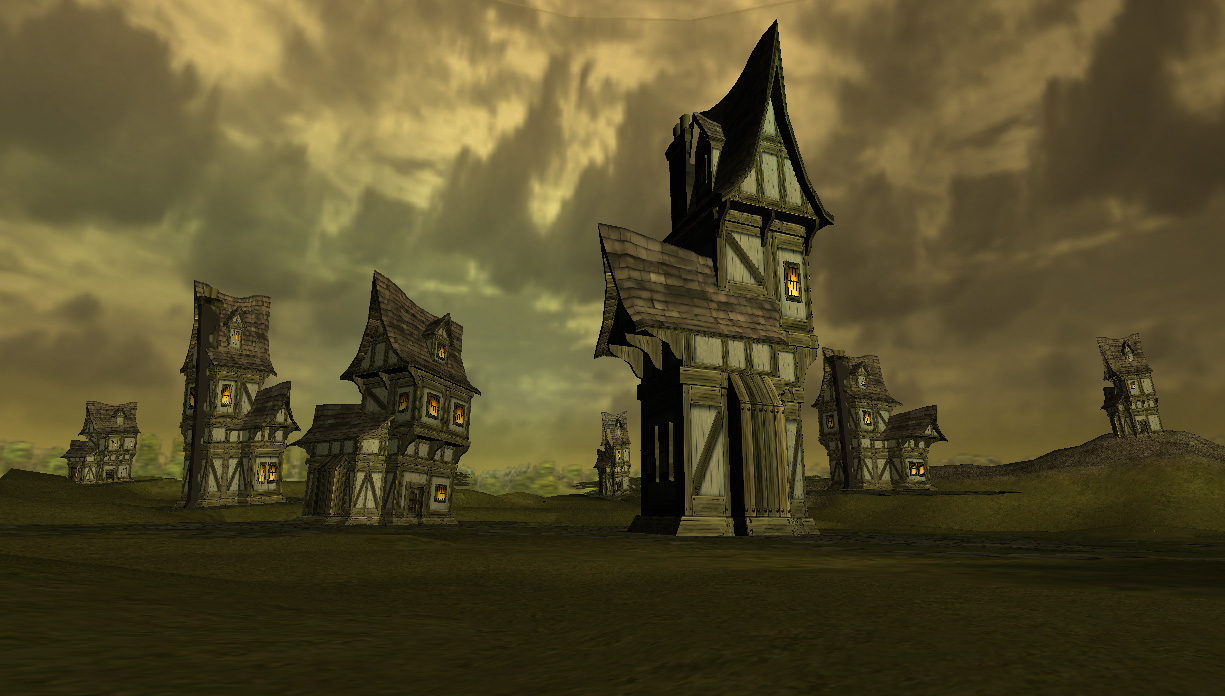 While many of us are working on Galactic Civilizations II in order to deliver new updates, the rest of our game team is working on our other major game title, Society.
Society is a massively multiplayer RTS. But it's not an RTS in the sense most people think of it -- warfare is not what people will spend most of their time doing. Most of the time is spent building their society -- constructing buildings, researching the endless technology tree (it's a persistent world so that tech tree goes on forever), helping their Socians live out their lives, trading with neigbhors. Oh, don't get me wrong, there's definitely war. It's just not that common.
If you thought the ship design stuff in GalCiv II is cool, wait till you see what you'll be doing in Society. Virtually everything can optionally be designed by the users (see screenshot).
To get the latest news on it, head over to www.societygame.com.
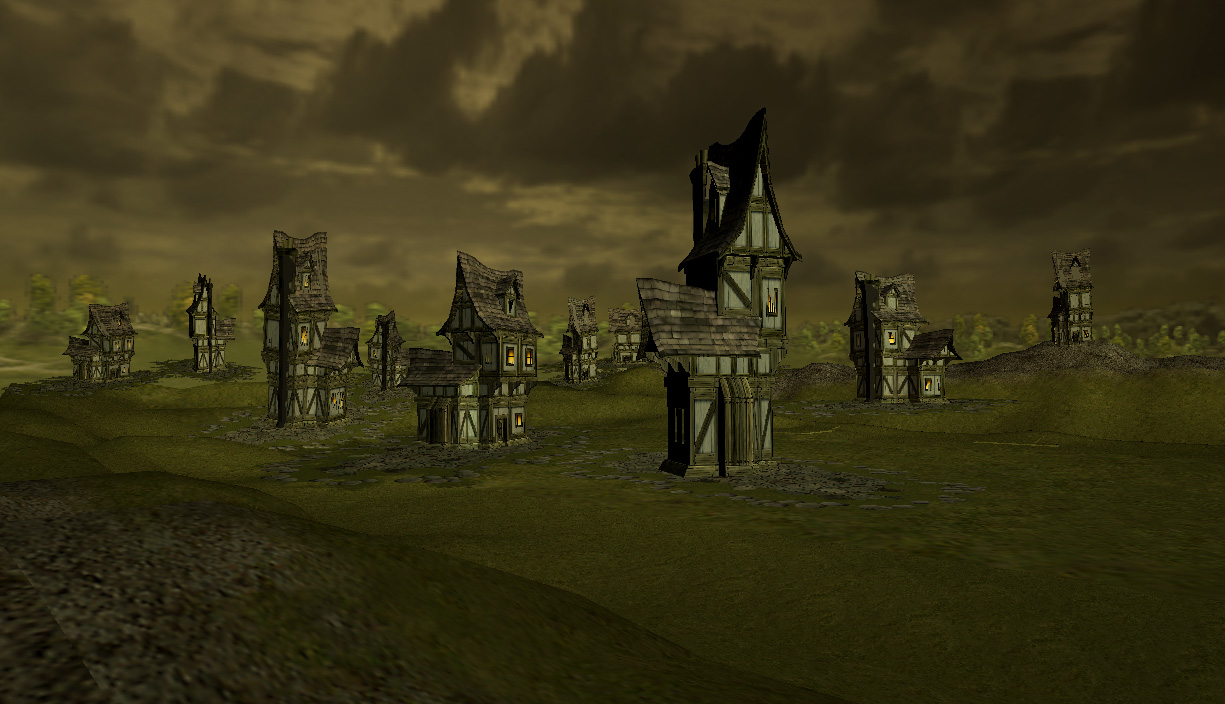
Things continue to move forward on Society. We're still a long...long way for having anything that is ready to ship. As a recap, Society is a massively multiplayer real-time strategy game. Unlike the typical RTS, warfare is the exception -- it is just diplomacy by other means. Most of the player's time is spent building their societies. That means designing their cities, providing for their people, developing a culture, dealing with the royal family, trading with neighbors, etc. Warfare is definitely an element But Society isn't about raising masses of troops for constant warfare. Such game mechanics would fall apart in a persistent universe game. After all, you don't want to wake up and have your empire destroyed during the night. Your skill will effect how powerful your society is overall.
There are many game mechanics we're still playing around with. Weather (as the screenshot demonstrates) on a global scale. Should the weather be real? That is, based on the server location? Or it should it be random? Should your population of Socians be large or small? Right now, we're increasingly inclined to have populations be fairly small (maybe a hundred people per province). That way, you can get to know each and every citizen of your Society if you want -- from the moment they're born, their childhood all the way until you send them off to war to get killed. And who do you sent off the war? How egalitarian do you want to be? Are you going to send your best and brightest? Your wealthiest? Every Socian is unique, some produce more than others in different areas.
What about your cities? How do you want them to be? If you think the ship design features in Galactic Civilizations II were neat, wait till you see how much you can do in the user-designed buildings (see screenshot).
So when will this thing come out? A lot of that depends on how many people we can get on the team. We are looking for game developers, .NET developers, artists, you name it. Send your resume to [email protected] with the subject "Game Developer". We're located in Plymouth Michigan (no external team members on this project, we need everyone in-house for this). But if all goes well, we should have a workable build late this year or early next year. So it's still a ways off. We fully expect to have a year-long public beta. There's no other MMO to model this after so we are going to need to be very careful about how to best roll it out there.
As some people know, you can already mod Galactic Civilizations II quite heavily. We have a basic modding guide already up. The coolest mods are going probably going to involve the ship stuff. I've already seen people putting in high-polygon models that look really cool. All you have to do is load up Maya or 3D Studio, make your ship model or part or whatever and export it as a .X. Hard points are just dummy nodes that we did with 3D Studio. There's no polygon limit so you can go nuts. Then in the \data\english\gc2types.xml file you just put in your own stuff.
Of course, when it comes to sharing your mods we need something more robust. So this is a preview of what should be part of v1.1. We want to explicitly support total conversion mods easily.
1.1 will create a \Mods folder on install and provide an example mod that we'll make. The Mods folder is essentially a mirror of the GalCiv2 directory. For example:
\GalCiv2\Mods\Babylon5\data\English
\GalCiv2\Mods\Babylon5\gfx
\GalCIv2\Mods\Babylon5\Screens
and so forth.
In the root of the actual mod folder (using Babylon5 as an example since JMS has tended to be more supportive of mods and fan content over the years) you would have a mod.xml file that will provide a description of the mod and various notices/permissions that the mod author may have needed to obtain.
There will also be a \Generic directory which will simply be a catch-all for all the mods you get from here and elsewhere. You can just dump your stuff in that directory and the game will use it. The game won't care about the file names of the XML files. It will only be looking at the key names in the XML files.
In the Games Options window, there will be a Mods button that when pressed will bring up a dialog asking you which set of mods you want to use. Based on what you select, it'll add those ships, screens, data, etc. in and replace the included ones when applicable.
We hope to have v1.1 out by either the end of this month or early next month. We're currently working on getting the demo out the door.
Mods will be available in the library section, though be aware that we're clamping down on copyrighted material. Don't upload to us other people's work unless you have permission.